Introduction
If you’re planning a scuba diving trip to the Red Sea and want to see clownfish, you’re in for a treat. The Red Sea is home to some of the most vibrant and unique clownfish species on the planet. This article covers the different species you can expect to see, where to find them, and what gear will make the experience better. It’s written for divers who want practical, on-the-ground advice rather than travel magazine fluff. Whether you’re a seasoned diver or planning your first trip, knowing what to look for underwater changes how you approach each dive. The information here comes from real experience and a deep appreciation for what makes the Red Sea special.

Why the Red Sea is a Top Destination for Clownfish Diving
The Red Sea stands apart from other famous clownfish diving destinations like Indonesia or the Philippines for several reasons. The water is consistently warm and clear, with visibility often exceeding 30 meters. This makes spotting small fish like clownfish much easier than in murkier waters. The Red Sea also has a high concentration of anemones, the host creatures that clownfish rely on. These anemones thrive in the stable conditions, creating dense clusters that attract multiple species.
Compared to Indonesia, where you might see a dozen different species spread across a huge area, the Red Sea has fewer species overall but a higher density of individuals. That means you can see many clownfish on a single dive without traveling far. The Red Sea also has several endemic species, found nowhere else on earth. For a diver focused on seeing specific fish, that’s a big draw. The reefs here are also less crowded than some spots in the Maldives or the Great Barrier Reef, giving you more time to observe behavior without other divers rushing past.
From a logistics standpoint, the Red Sea is relatively accessible. Liveaboards operate year-round, and shore-based diving from places like Sharm El Sheikh or Hurghada is straightforward. The combination of high visibility, dense anemone populations, and unique species makes the Red Sea a top choice for any diver interested in clownfish.
Red Sea Clownfish Species: A Quick Overview
Here’s a quick reference for the main clownfish species you’ll encounter in the Red Sea. This isn’t an exhaustive list, but it covers the ones you’re most likely to see on a typical dive trip.
- Amphiprion bicinctus (Two-banded clownfish): The most common and iconic Red Sea species. Recognizable by two white bars on a dark orange body. Hosts specifically in Heteractis and Stichodactyla anemones.
- Amphiprion clarkii (Clark’s anemonefish): Widespread and adaptable. Found in a variety of anemones, including ones with lower light requirements. Has three narrow white bars and a yellow tail.
- Amphiprion omanensis (Oman anemonefish): A rarer species found in the southern Red Sea, near the border with Yemen and Oman. Similar in appearance to the two-banded clownfish but with a broader white bar on the head. More challenging to spot.
- Amphiprion polymnus (Saddleback clownfish): Less common in the Red Sea but present in some southern regions. Has a distinct “saddle” marking on the back. Usually found in sand anemones.
These four species represent the bulk of what you’ll see. Understanding their differences helps you identify them quickly underwater, which is useful for photography and logging your sightings.
Amphiprion bicinctus: The Red Sea’s Signature Spot
When people think of clownfish in the Red Sea, they’re usually thinking of the two-banded clownfish, Amphiprion bicinctus. This is the signature species of the region. It has a dark orange body with two distinct white bars, one just behind the head and another at the mid-body. The tail is white, which helps distinguish it from similar species like Clark’s anemonefish.
These fish are highly territorial and will aggressively defend their host anemone. That makes them excellent subjects for photography because they tend to stay in a small area. For divers, this means you can spend several minutes observing or photographing a single pair without having to chase them. They are most commonly found in Heteractis aurora and Stichodactyla gigantea anemones, which often grow on coral bommies or flat sandy patches.
In terms of depth, Amphiprion bicinctus prefers shallow water, typically between 3 and 15 meters. This makes them accessible to divers of all experience levels. You don’t need to go deep to find them. Sites like Ras Mohammed National Park and the straits of Tiran are prime locations. If you are interested in photographing these fish, consider using a macro lens or a diopter. A compact camera with a dedicated underwater housing is sufficient. For those wanting sharper shots, a mirrorless or DSLR setup with a macro lens works better. I have used a Sony A6000 with a 90mm macro lens in a Nauticam housing for years, and it delivers excellent results for these close-up subjects.
A practical tip: approach the anemone slowly and keep your fins away from the tentacles. The clownfish will probably come out to check you, which gives you a natural framing opportunity.
Clark’s Anemonefish: The Adaptable Opportunist
Clark’s anemonefish (Amphiprion clarkii) is a widespread species, but it’s also present in the Red Sea. What makes it interesting is its adaptability. Unlike the two-banded clownfish, which is picky about its host anemone, Clark’s anemonefish will live in almost any anemone species. This includes Heteractis magnifica, Entacmaea quadricolor, and even bulb-tipped anemones that are less common in the Red Sea.
Because of this adaptability, you can find Clark’s anemonefish in a wider range of habitats. They are common on shallow reefs, but they also appear on deeper walls and in more silty environments where other clownfish might not thrive. This makes them a reliable sighting, even on less pristine dives. Behaviorally, they are more cautious than the two-banded clownfish. They often stay closer to the anemone’s base and retreat faster if you get too close.
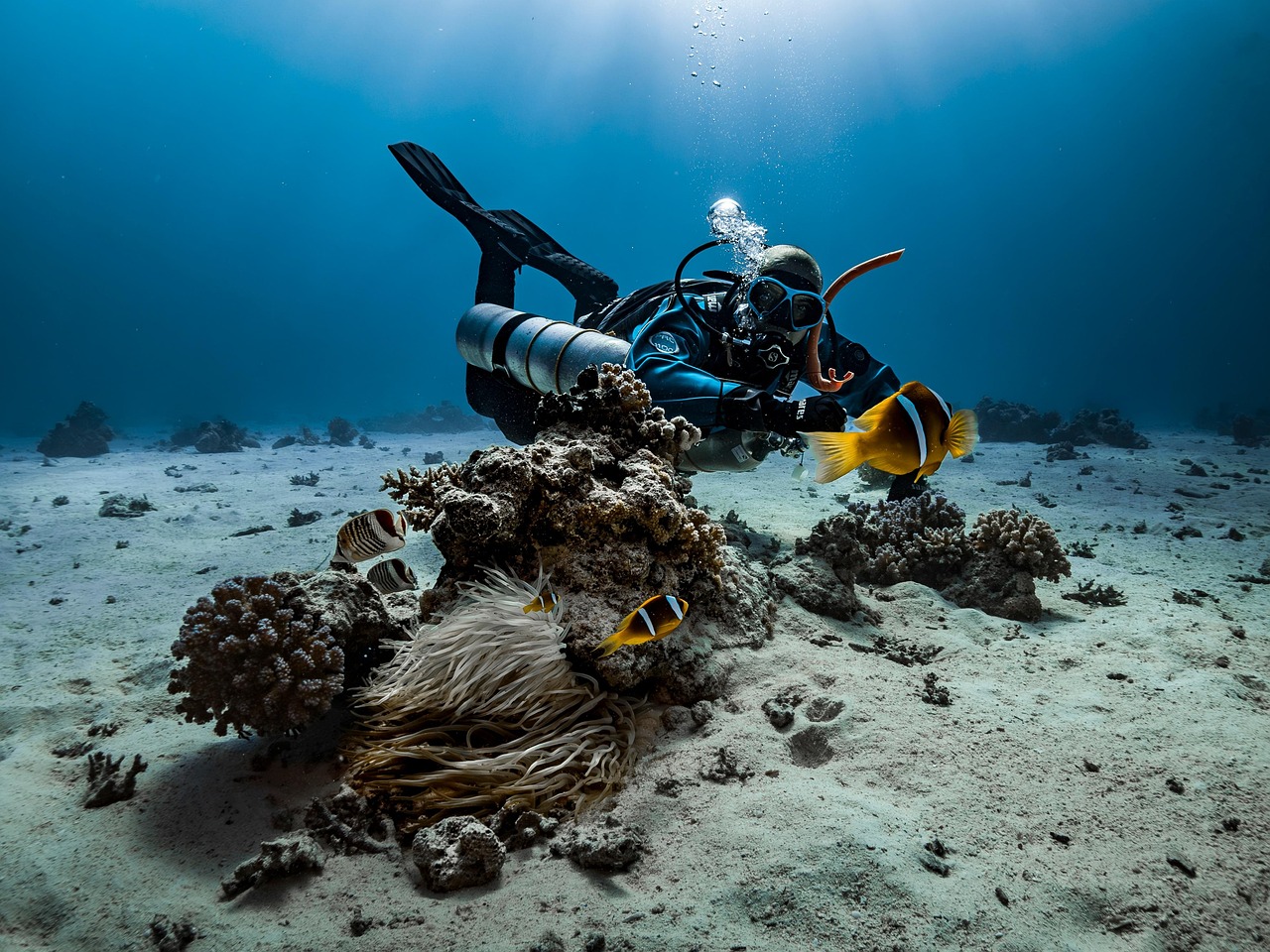
One practical implication for divers: if you’re diving deeper reefs or sites with stronger currents, bring a dive torch. A good dive light helps you spot the anemone and the fish in lower light conditions, especially on deeper walls below 20 meters. I recommend a 1000-lumen dive torch with a rechargeable battery for this purpose. It also helps for seeing the subtle color differences between Clark’s and other species.
If you want to photograph Clark’s anemonefish, be patient and use a slower approach. They respond well to divers who are still and quiet, but they will bolt if you move too fast.
Less Common Species: The Oman and Saddleback Anemonefish
For divers seeking a harder challenge, the Red Sea has two less common species worth knowing about: the Oman anemonefish (Amphiprion omanensis) and the saddleback clownfish (Amphiprion polymnus). These are not guaranteed sightings, but they add a layer of discovery to your trip if you know where to look.
The Oman anemonefish is found in the southern Red Sea, particularly near the coast of Yemen and southern Saudi Arabia. It looks quite similar to the two-banded clownfish, but the white bar on the head is broader and more prominent. It also tends to occupy deeper water, sometimes down to 30 meters. If you’re diving on a liveaboard that goes into these southern regions, ask the dive guides specifically about this species. They will often know the exact anemones where it lives. Realistically, most casual divers won’t see this species, but if you are a dedicated fish spotter, it is worth planning a trip that covers the southern Red Sea.
The saddleback clownfish is more common in the Indo-Pacific but has been recorded in the Red Sea, mostly around the Gulf of Aden and the far southern reaches. It has a distinctive saddle-shaped marking on its back and typically lives in sand anemones (Heteractis crispa). These anemones are often found on sandy bottoms or rubble patches rather than on coral reefs. To find them, look for white, stringy tentacles that are slightly sparse compared to other anemones. This species is also deeper on average, often between 10 and 25 meters.
If you’re specifically targeting these rarer species, I recommend bringing a dedicated fish identification book or a waterproof reference card. It helps avoid confusion, especially with the Oman species. A waterproof fish ID card for the Red Sea is a lightweight, practical tool that fits in your BCD pocket.
Best Red Sea Dive Sites for Clownfish Spotting
Here are three dive sites that consistently deliver on clownfish sightings. They’re well-known, accessible, and offer high visibility.
- Ras Mohammed National Park (Sharm El Sheikh): This is the most famous dive site in the Red Sea. The Yolanda Reef and Shark Reef areas have dense anemone gardens on shallow plateaus. Expect to see large numbers of Amphiprion bicinctus in depths of 5 to 15 meters. The currents can be moderate, so a good dive computer is helpful for managing your no-deco limits if you’re doing multiple deep dives. I use a Suunto D5 for its reliability in current and clarity for reading your stop times.
- Brothers Islands (Daedalus and Elphinstone): These are deeper, offshore sites known for pelagic life, but they also have excellent anemone habitats on the reefs. The shelter of the islands creates calm areas where anemones thrive. At Elphinstone, check the southern tip of the reef in 8-12 meters of water. You’ll find Amphiprion clarkii and occasionally Amphiprion bicinctus. These sites are better for experienced divers due to currents and depth.
- Daedalus Reef: Similar to the Brothers, but with a stronger reputation for anemone fields. The reef has a broad plateau on the leeward side that is perfect for slow exploratory dives. I have seen large clusters of Amphiprion bicinctus here, sometimes with multiple pairs in a single anemone. Bring a dive logbook to record your sightings. A waterproof dive logbook is useful for noting species and locations, which helps you track what you have seen over multiple trips.
All three sites are accessible from liveaboards or day boats from Sharm El Sheikh or Hurghada. Plan your dives around the current schedules, and always dive with a guide who knows the reef.

Gear Essentials for Clownfish Diving in the Red Sea
Packing right makes the difference between a comfortable dive and a frustrating one. Here’s what I recommend based on many Red Sea trips.
- Exposure protection: Water temperatures range from 22°C in winter to 28°C in summer. A 3mm to 5mm wetsuit is ideal. In winter, consider a 7mm suit or a hooded vest. You’ll be spending time at shallow depths where the water is warmest, but multiple dives in a day can still chill you.
- Mask: Clownfish often hide in anemone tentacles, so a mask with a good field of view helps you scan the reef efficiently. I favor masks with dual lenses and a low volume. They give a wider view without distortion.
- Camera setup: For clownfish, a macro diopter is a fantastic upgrade. It lets you get sharp close-ups of their faces and patterns. A 67mm macro diopter attaches to most camera lenses or port systems. Alternatively, a compact camera with a built-in macro mode works fine.
- Reef-safe sunscreen: This is non-negotiable. Sunscreens with oxybenzone are banned in many Red Sea areas because they harm corals and anemones. Use a mineral-based reef-safe sunscreen that is zinc oxide or titanium dioxide based.
- Dive computer: Even if you’re diving shallow, a reliable dive computer keeps you safe on repetitive dives. I recommend one with a simple interface and a clear display for the Red Sea’s bright conditions.
Don’t overpack. Focus on gear that solves a specific problem: visibility, comfort, and subject capture.
Timing Your Trip: Seasonal Considerations for Clownfish Diving
The Red Sea is a year-round destination, but the conditions change depending on the season. The best time for clownfish diving is generally from April to November. During these months, the water is warmest, visibility is at its peak (often 40 meters or more), and currents are milder. This makes it easier to find anemones and observe fish behavior without being pushed around by strong current.
Winter months (December to February) bring cooler water and stronger winds, which can create choppy surface conditions. Visibility can drop to 20 meters or less, and currents are more unpredictable. However, clownfish are still present. The trade-off is fewer crowds and lower prices. If you’re on a budget, winter diving can be a good option, but you’ll need thicker exposure protection. Liveaboards still run trips, but some shore-based operations may have limited schedules.
For species like Amphiprion bicinctus, activity is consistent across the year. They spawn year-round, but breeding peaks in spring. If you want to see courtship behavior or small juveniles, plan for May or June. For the rarer southern species, aim for summer months when the southern Red Sea is calmer and more accessible. Booking a liveaboard that covers the south in July or August is a solid strategy.
Common Mistakes Divers Make When Spotting Clownfish
I’ve seen the same mistakes over and over. Avoiding these will improve your experience and help protect the reef.
- Rushing the dive: Many divers swim too fast and pass over anemones without noticing them. Clownfish are not always out in the open. Slow down, especially on shallow plateaus or sandy patches where anemones blend in. A slow, methodical swim pattern works best.
- Ignoring smaller anemones: Not all anemones are huge. Juvenile clownfish often live in small, isolated anemones that are easy to miss. Check every anemone you see, regardless of size. A tiny anemone on a coral bommie can hold a pair of Amphiprion bicinctus.
- Not using a reference guide: Without a fish ID card or guidebook, you might confuse species. The difference between a two-banded and a three-banded clownfish can be subtle in dull light. A waterproof card helps you confirm quickly.
- Disturbing the anemone: Some divers poke the anemone to make the clownfish come out. This stresses the animal and can damage the tentacles. Be patient. If you wait quietly, the fish will often show itself. If it doesn’t, move on.
A waterproof fish ID reference card for the Red Sea is a small, practical tool that solves the identification problem immediately. It fits in your BCD pocket and costs very little.
Comparing Red Sea Clownfish Diving to Other Regions
Here’s how the Red Sea stacks up against other popular clownfish diving regions. This isn’t about which is “better,” but about what fits your priorities.
- Red Sea vs. Maldives: The Maldives has more anemone species overall, but the Red Sea has higher density in specific areas. The Maldives also has stronger currents in some passes, which can make observation harder. The Red Sea is generally more accessible for single-site diving without needing a liveaboard. Cost-wise, the Red Sea is generally cheaper, especially if you base yourself in Egypt.
- Red Sea vs. Great Barrier Reef: The GBR has more clownfish species overall (around 14 species), but many are hard to find and spread over a huge area. The Red Sea has fewer species but they are concentrated in smaller areas. The GBR also has more restrictions and higher permit fees in some zones. For a focused clownfish trip, the Red Sea is more efficient.
- Red Sea vs. Philippines: The Philippines has the highest diversity of clownfish species in the world, but the visibility is often lower due to plankton. The Red Sea offers much better visibility, which is a significant advantage for spotting and photographing fish. The Philippines also has more variable conditions and more challenging logistics. For a straightforward, high-visibility trip, the Red Sea wins.
If you’re planning a trip and want to maximize sightings with minimal hassle, the Red Sea is a strong choice. One thing to consider is dive travel insurance. The Red Sea has some remote sites, and medical evacuation capabilities are not as robust as in the Maldives or Australia. I recommend dive travel insurance that covers hyperbaric treatment and evacuation. It’s a small price for peace of mind.

Final Tips for a Successful Clownfish Dive in the Red Sea
To wrap this up, here are the actionable takeaways.
- Go with a reputable dive operator that knows the local reef structure and anemone locations. Ask about their guides’ experience with fish identification.
- Be patient. Clownfish are territorial, not shy. If you hover near an anemone, they will eventually come out.
- Respect the reef. Don’t touch the anemone or its inhabitants. Use a camera with a zoom rather than getting too close.
- Keep a dive log. Tracking species, depths, and locations helps you build a picture of the reef over multiple trips. A simple waterproof logbook is enough.
Plan your gear in advance, check the season for the species you want to see, and go with realistic expectations. The Red Sea offers some of the best clownfish diving in the world, but it’s not a magic factory. With the right preparation, you’ll come back with great memories and perhaps a few photos to prove it.