Introduction
If youâre looking into maroon clownfish care, youâve probably noticed these aren’t your standard Nemo. Maroon clownfish (Premnas biaculeatus) are the heavyweights of the clownfish worldâbigger, bolder, and a lot more aggressive than the ocellaris or percula varieties you usually see. This guide covers what you actually need to know to keep them healthy, handle their temperament, and set up a tank that works for both of you. This is practical, experience-based advice for anyone serious about keeping these fish long-term.

Species Overview: What Makes Maroon Clownfish Different
Before you buy one, know what you’re getting into. Maroon clownfish aren’t beginner fish. They’re the largest clownfish species in the hobby, reaching up to 6 inches. Compare that to an ocellaris clownfish that tops out around 3 inches. That size difference changes everything about their care.
Wild maroon clownfish come from the Indo-Pacific region, around Northern Australia, Indonesia, and the Philippines. You’ll find them in lagoons and sheltered reefs, always hanging out with large anemones. In captivity, they can live 12 to 15 years with proper care, sometimes longer. Their maroon body with bright yellow to white vertical bars makes them easy to spot. Juveniles usually have brighter colors, while older fish may darken and develop thicker bars.
The main point: maroon clownfish are more demanding than their smaller cousins. They need more space, produce more waste, and have a temperament that requires careful tank management. Plan accordingly.
Tank Size and Setup Requirements
For a single maroon clownfish, a 30-gallon tank is the absolute minimum. For a pair, step up to at least 40 gallons. If you’re planning a community tank with other fish, go no smaller than 55 gallons. Bigger is always better because tank size directly affects aggression.
Larger tanks help because of territory. Maroon clownfish are highly territorial, especially once they mature and pair up. In a smaller tank, they claim everything. In a larger tank, they settle into a specific area and let other fish have the rest. It’s not a guarantee, but it cuts down on conflict a lot.
For filtration, a good canister filter or sump system works well. Maroon clownfish are messy eaters and create a fair amount of waste, so over-filtering is smart. Aim for a turnover rate of 8 to 10 times the tank volume per hour. A powerhead or wavemaker for moderate to high water flow helps tooâthese fish naturally live in areas with decent current. Substrate isn’t criticalâlive sand or crushed coral both work. What matters more is plenty of rockwork with caves, overhangs, and crevices. Hiding spots are essential for reducing stress and giving tank mates escape routes.
Start with a 40-gallon breeder tank. The footprint is ideal for maroon clownfish because it offers more horizontal swimming space than a standard 40-gallon tall. Pair it with a Fluval FX series canister filter or a BRS Reef Sump if you’re going sump-style. For flow, a Jebao OW wavemaker is reliable and reasonably priced. Hobbyists setting up a new tank often find it helps to search for a sturdy 40-gallon breeder tank stand that can support the weight of a full aquarium.
Water Parameters: Keeping Conditions Stable
Maroon clownfish aren’t as fragile as some reef fish when it comes to water quality, but that doesn’t mean you can slack off. They’re sensitive to rapid changes and poor conditions will lead to stress, disease, and aggression issues. Stability is more important than hitting exact numbers.
- Temperature: 74â82°F (aim for 78°F as a stable midpoint)
- pH: 8.0â8.4
- Salinity: 1.020â1.025 specific gravity (1.025 is ideal)
- Ammonia/Nitrite: 0 ppm
- Nitrate: Below 20 ppm (lower is better)
Test weekly, not just when something looks off. A reliable test kit makes this easy. The API Saltwater Master Test Kit is fine for the basics, but if you want more accuracy for salinity, get a refractometer instead of a swing-arm hydrometer. Swing-arms tend to be inaccurate over time. The Salifert Refractometer is a solid choice that will last years. For nitrate and phosphate, Hanna Instruments checkers are worth the upgrade if you’re serious about precision. A quality saltwater test kit is a good investment for anyone just starting out.
The mistake beginners often make here is chasing perfect numbers with drastic water changes. Slow and consistent is better. A 10-15% weekly water change using pre-mixed saltwater will keep things stable. Avoid big swingsâmaroon clownfish will let you know by sulking in a corner, refusing food, or ramping up aggression.
Feeding Maroon Clownfish: Diet and Nutrition
Feeding maroon clownfish is straightforward once you know the rules. They’re omnivores with a slight carnivorous lean. A varied diet is the secret to vibrant color, good health, and active behavior. Don’t just dump flake food in the tank and call it done.
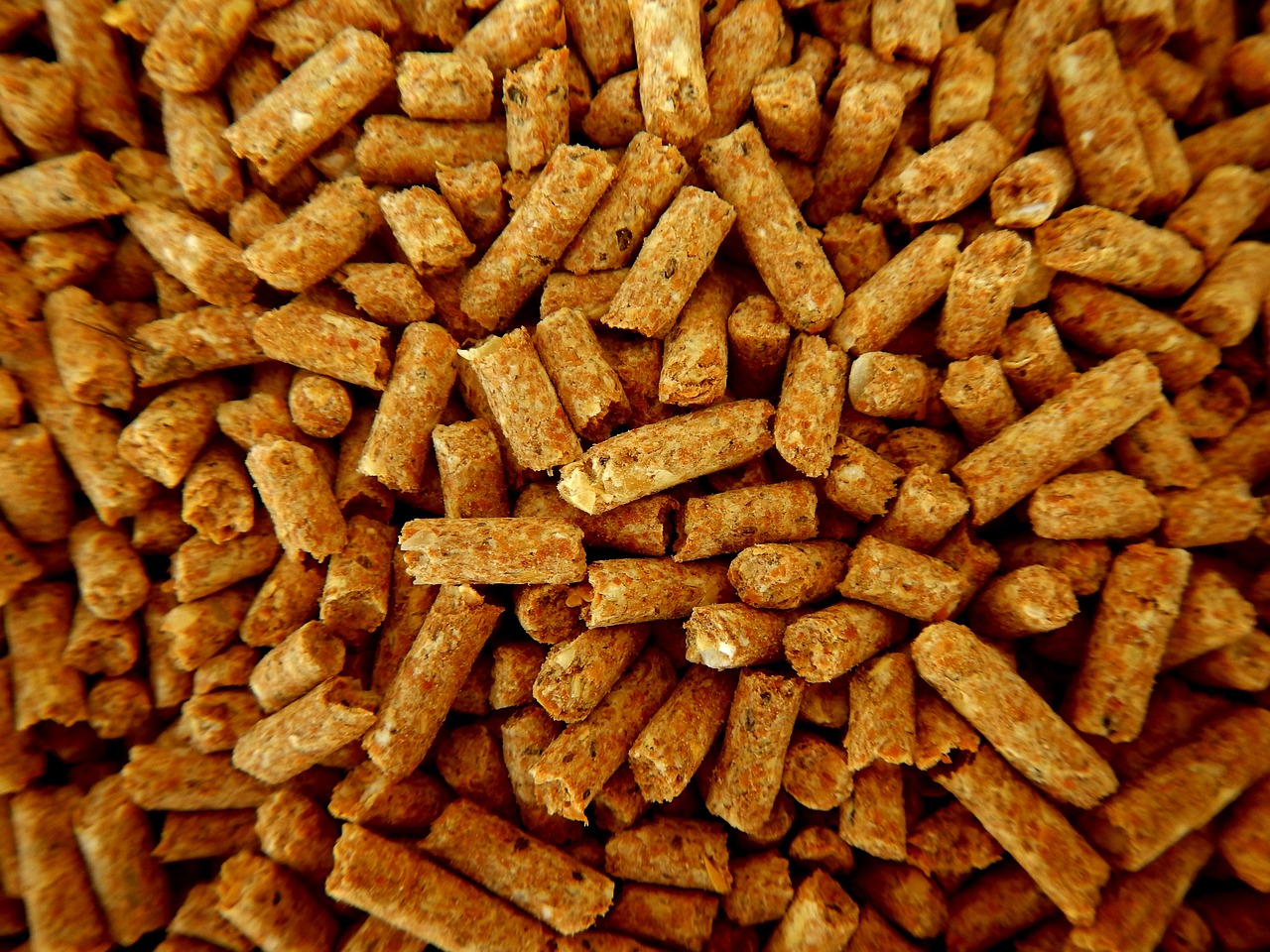
Start with a high-quality pellet as the staple. Hikari Marine S or New Life Spectrum Thera+A are both excellent choices. Pellets provide balanced nutrition and are easy to measure. Supplement with frozen foods two to three times per week. Mysis shrimp is a favorite and provides good protein. Brine shrimp is fine as a treat, but it’s not as nutritious on its own. Spirulina-enriched brine shrimp or frozen Spirulina cubes add plant matter that supports digestion and coloration.
Feeding frequency depends on age. Juveniles should eat two to three times per day in small portions. Adults do fine with one daily feeding, though offering a second small feeding every other day is fine if they’re active. Watch their body conditionâif they start looking round-bellied, cut back. These fish will eat themselves sick if you let them.
If you have a picky eater, don’t worry too much. Most maroon clownfish take to pellets quickly, especially if you fast them for a day before offering new food. Soaking pellets in garlic oil (like Seachem Garlic Guard) sometimes helps entice reluctant fish. Avoid overfeeding frozen foods, as they can foul the water quickly if uneaten.

Maroon Clownfish Aggression: What to Expect and How to Manage It
This is the biggest challenge with maroon clownfish. They’re the most aggressive clownfish species in the hobby, and the reputation is earned. The aggression usually starts once they reach about two to three inches in length and intensifies as they mature. A pair will defend their chosen territoryâusually a specific cave or corner of the tankâwith surprising ferocity. They’ll chase, nip, and sometimes injure tank mates.
The aggression isn’t random. It’s tied to territory size, tank layout, and whether they feel secure. Here’s how to manage it.
Introduce fish at the same time. Adding a maroon clownfish to an established community is asking for trouble. They’ll see every existing fish as an intruder. If possible, set up the tank with all new fish introduced simultaneously. If you’re adding them to an existing tank, rearrange the rockwork before introducing the clownfish. This resets territorial boundaries for all fish.
Give them space. A larger tank helps, but layout matters too. Place rockwork to create distinct territories with open swimming areas between them. Avoid putting the main hiding spots all in one area. Spread them out so the clownfish claims one section and other fish can stay in another.
Provide a host anemone. This is the most effective aggression management strategy. When maroon clownfish have an anemone to host, they tend to stay close to it instead of patrolling the entire tank. Without a host, they often roam more aggressively. The anemone becomes their home base, and they defend that immediate area rather than the whole tank.
A common mistake: keeping two maroon clownfish alone in a tank without a host anemone. They’ll often turn on each other, especially as they mature and try to establish a dominance hierarchy. A larger tank with plenty of rockwork and an anemone gives them structure. If you see persistent aggression that doesn’t calm down, you may need to rehome one fish. It’s not ideal, but it’s better than dealing with constant stress and injury.
Best Tank Mates for Maroon Clownfish
Not all fish can handle living with a maroon clownfish. You need tank mates that are either fast enough to avoid trouble or robust enough to hold their own. Docile, slow-moving fish are a recipe for disaster.
Best options:
- Tangs â They’re fast, active, and usually large enough to avoid being bullied. A yellow tang or Kole tang works well in tanks 75 gallons or larger.
- Large damsels â Some blue or yellowtail damsels are aggressive enough to coexist, but watch for escalation. This pairing can turn into a secondary aggression problem.
- Large wrasses â Species like the six-line wrasse or Melanurus wrasse are constantly moving and rarely stay still long enough to get pinned down.
- Puffers and triggers â These are tough fish that won’t back down easily. But they come with their own care requirements and potential aggression problems. Only attempt this in larger tanks with experienced management.
Avoid:
- Small gobies â Firefish, clown gobies, and shrimp gobies are too passive. Maroon clownfish will chase them relentlessly.
- Small blennies â Similar issue; they’re not equipped to deal with constant harassment.
- Cardinals and dartfish â These fish are peaceful and slow-moving. They’ll get stressed and stop eating.
If you’re unsure about compatibility, check online forums for specific pairings before buying. It’s easier to plan ahead than to deal with a rehoming situation later.
Anemone Hosts: Which Ones Work Best
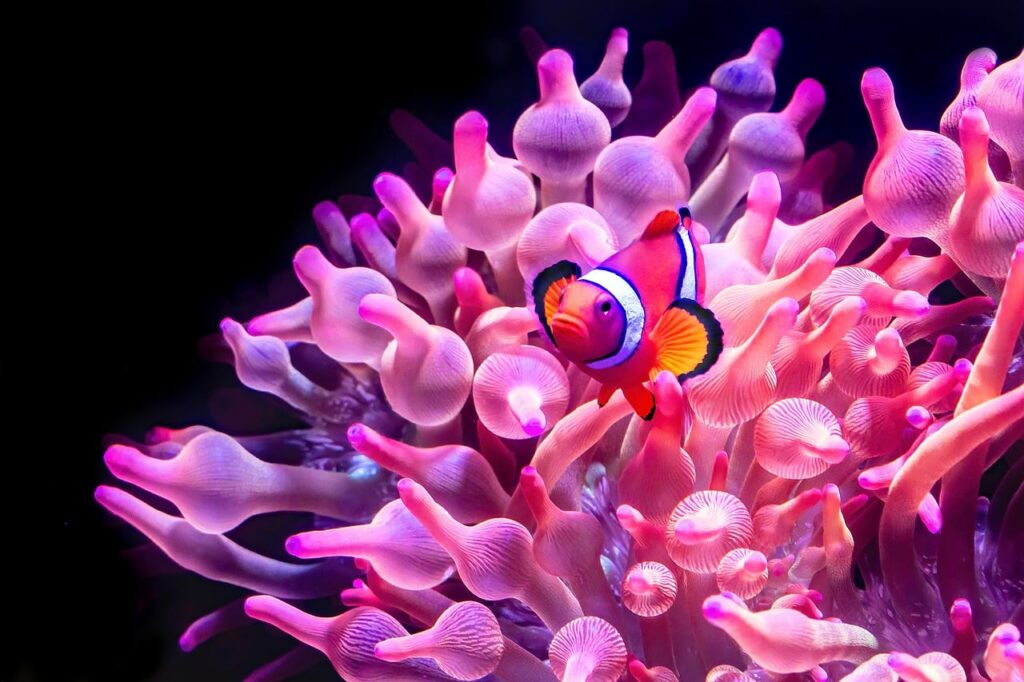
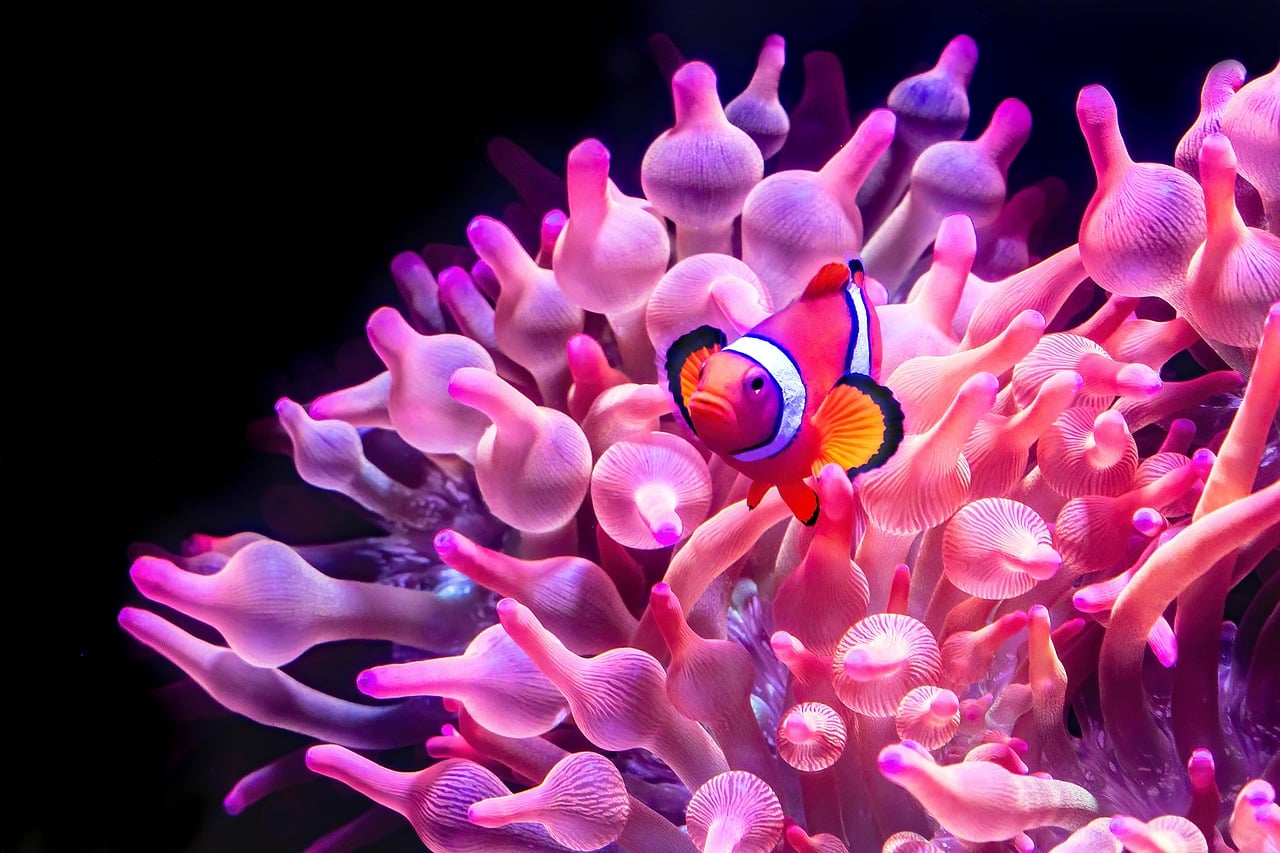
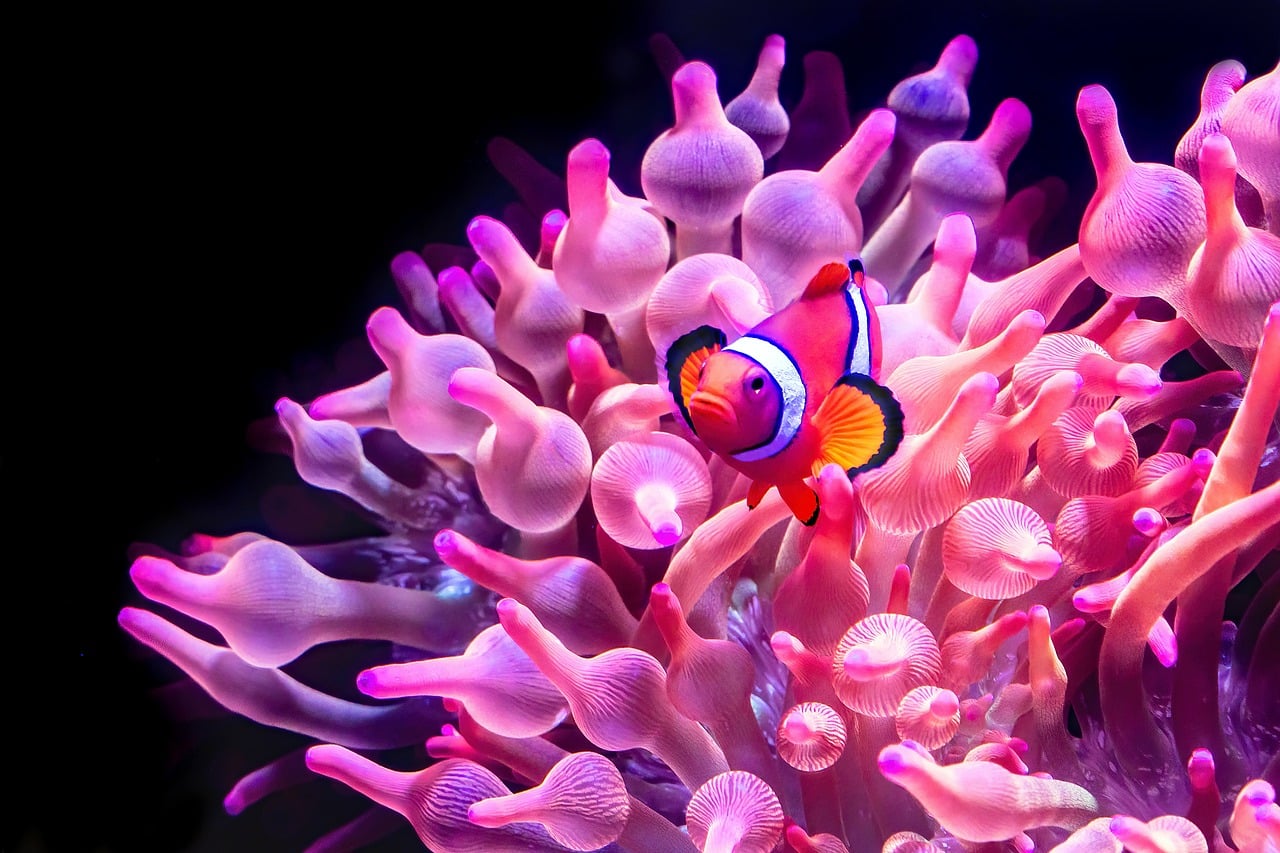
Maroon clownfish have a natural preference for bubble-tip anemones (Entacmaea quadricolor). In the wild, this is their primary host, and most captive-bred maroon clownfish will accept one readily. The bubble-tip anemone is also one of the easier anemones to keep, though “easy” is relative. They still require stable water parameters and strong lighting.
Other hosts include carpet anemones (Stichodactyla haddoni or Stichodactyla gigantea) and long-tentacle anemones (Macrodactyla doreensis). Carpet anemones have more aggressive stings and can be dangerous to other coral and fish. Long-tentacle anemones prefer deeper sand beds and can be finicky about tank conditions. For most hobbyists, the bubble-tip anemone is the best choice.
If you decide to add an anemone, here’s what you need to know. They need stable water parameters, especially temperature and salinity. They also need strong lightingâeither T5HO or LED fixtures designed for reef tanks. Cheap strip lights won’t cut it. A Radion XR15 or AI Prime 16HD will keep a bubble-tip happy. Feed them once or twice a week with small pieces of shrimp or silversides. They don’t need daily feeding.
One important warning: anemones can sting nearby corals. Place the anemone in an area where it has room to expand without touching your other coral. If it moves, consider it a sign that conditions aren’t right. They’ll walk around the tank until they find a spot they like. You can’t always control where they settle.
Common Health Issues and How to Prevent Them
Maroon clownfish are generally hardy if given stable conditions, but they’re not immune to disease. Most health problems trace back to stress, poor water quality, or inadequate quarantine practices.
Ich (Cryptocaryon irritans) is the most common parasite. White spots on the body and fins, flashing against rocks, and heavy breathing are telltale signs. Prevention starts with quarantining new fish for 4-6 weeks before introducing them to the main tank. If ich appears, raising the temperature to 82-84°F and adding a UV sterilizer can help, but medication is often needed. Copper-based treatments like Copper Power work, but they’re harsh and require careful dosing.
Brooklynella is a nasty protozoan infection that causes respiratory distress, cloudy skin, and sloughing of the slime coat. It moves fast and is often fatal if not treated immediately. Freshwater dips can provide temporary relief, but formalin-based medications are the most effective. Prevention again comes down to proper quarantine.
Marine velvet is similar to ich but more aggressive. Symptoms include rapid breathing, lethargy, and a velvet-like sheen on the skin. It can kill a fish within 24 hours if untreated. Treatment involves copper or chloroquine phosphate medications. Quarantine is non-negotiable.
Beyond parasites, watch for signs of bacterial infections: red streaks, frayed fins, or open sores. These are usually secondary to stress or injury from aggression. Improve water quality, reduce stress, and consider a broad-spectrum antibiotic like Furan-2 if the infection progresses.
The best prevention: a 10-15% weekly water change, stable parameters, a good diet, and a quarantine tank for any new arrivals. A 20-gallon quarantine tank with a sponge filter, a heater, and Seachem Prime for water conditioning is a worthwhile investment. Skip quarantine and you’re gambling with your entire tank. A complete quarantine tank setup can help prevent outbreaks before they start.
Breeding Maroon Clownfish at Home
Breeding maroon clownfish is possible for motivated hobbyists, but it’s not a weekend project. The process requires patience, good observation skills, and the willingness to culture live food for the fry.
First, you need a pair. Maroon clownfish are protandrous hermaphroditesâthe larger fish becomes the female, the smaller becomes the male. You can buy a known pair or raise two juveniles together and let them pair naturally. Raising two from small juveniles together works better than trying to pair an adult with a new fish, which often leads to aggression.
Once paired, the female will become noticeably larger. The male will be smaller and more submissive. They’ll clean a flat surface near their chosen host or territoryâoften a piece of flat rock or a clay tile. You can provide a spawning tile (a flat, unglazed ceramic tile) placed vertically near their territory. This makes it easier to remove and rear eggs.
Spawning usually happens every two to three weeks once the pair is conditioned. The female lays hundreds of orange eggs, and the male fertilizes them. The male will guard and fan the eggs until they hatch, which takes about 5-7 days depending on temperature. At this point, you need to move the eggs to a rearing tank if you want the fry to survive. The community tank is too dangerous for them.
Raising maroon clownfish fry requires a separate tank with gentle filtration, live rotifers for early feeding, and a steady supply of newly hatched brine shrimp after about a week. Rotifer culture is the hardest part for most beginners. You need a separate culture going with Rotifer Diet and consistent harvesting to keep the fry fed. It’s not expensiveâa Rotifer Starter Kit costs around $30-40âbut it requires daily attention.
Be realistic about whether you have the time and space. Breeding is rewarding, but it’s not for everyone. If you’re interested, start with a pair in a dedicated 20-gallon breeding tank and see if they spawn. If they don’t, adjust feeding and conditioning. Some pairs take months to adjust.

Common Mistakes Beginners Make with Maroon Clownfish
- Underestimating tank size. A 10-gallon nano tank is not enough. These fish need room to swim and territory to claim. Start with a 40-gallon minimum.
- Ignoring aggression. That cute little fish will become a terror if you don’t plan ahead. Provide space and hiding spots from day one.
- Poor water quality. Skipping weekly water changes or using dirty equipment leads to stressed fish and disease outbreaks.
- Improper diet. Only flake food will result in dull color and poor health. Mix in frozen foods and high-quality pellets.
- Adding them to established tanks with small fish. Maroon clownfish will bully smaller, passive fish. Choose tank mates carefully.
- Skipping quarantine. Every new fish should spend at least a month in a separate tank before joining the main display. This prevents parasites from wiping out your system.
- Not enough hiding spots. A bare-looking tank with minimal rockwork gives fish nowhere to retreat. Structure your tank with caves and overhangs for safety.
Every one of these mistakes is avoidable with a little planning. Learn from them before you set up your tank.
Final Tips for Long-Term Success
Maroon clownfish care comes down to three things: stability, space, and respect for their temperament. Keep the tank stable with regular testing and water changes. Give them enough room to grow and claim territory. Work with their aggression instead of fighting it.
Start with a single juvenile. Let it settle into your tank for several months. Observe its behavior. If you decide to add a mate later, choose a smaller fish and watch for compatibility. A single maroon clownfish is often easier to manage than a pair, especially for your first attempt with this species.
Invest in quality equipment from the start. A good filter, a reliable heater, strong light, and a proper test kit will save you headaches down the road. A recommended equipment pack for maroon clownfish care covers everything you need to get started without buying junk. Skip the cheap knockoffsâthey break and cause problems that cost more in the long run.
Stick with the fundamentals and you’ll have a healthy, active fish that lives for over a decade. These are some of the most rewarding fish in the hobby when kept properly. Just don’t treat them like a beginner fish. Give them the setup they deserve and they’ll thrive.