Reef Tank Flow Rate GPH: Getting It Right for Your Corals
Setting up a reef tank or thinking about upgrades? You’ve heard flow matters—maybe more than you think. But how much does a reef tank actually need? The answer isn’t one number. It depends on your corals, tank size, and how you arrange things. This article covers reef tank flow rate GPH, what different corals need, how to calculate it, and which pumps deliver. Whether you’re growing softies, LPS, or SPS, you’ll walk away with a clearer plan.

Why Flow Rate Matters in a Reef Tank
Water flow is the unsung workhorse of a reef tank. It’s not just about moving water. Proper flow delivers nutrients and dissolved oxygen to every polyp. It sweeps away waste and keeps detritus from settling into dead spots. Without enough flow, you’ll fight nuisance algae, watch corals struggle to extend their polyps, and wonder why your water quality always feels off.
From a biological standpoint, flow supports gas exchange at the water surface. It pushes COâ out and brings oxygen in. Mechanically, it keeps particles suspended long enough for your filtration to catch them. You want enough flow to see detritus lifting off rockwork and sand, but not so much that you’re blasting sand into a dust storm.
I’ve seen tanks where a single powerhead aimed at a rock bleached the coral right in front from sheer force. I’ve also seen tanks with barely a ripple where cyano took over every surface. Flow is that delicate balance. Get it right and the tank mostly runs itself. Get it wrong and you’re constantly fixing problems.
Understanding GPH and Turnover Rate
Let’s get the numbers straight. GPH stands for gallons per hour—the volume a pump moves in an hour. Turnover rate is how many times total water volume cycles through your pump system each hour. For a 50-gallon tank with a 500 GPH pump, that’s 10x turnover per hour.
Here’s a practical baseline:
- Soft coral tanks: 10–20x turnover per hour
- LPS tanks: 20–40x turnover per hour
- SPS tanks: 40–60x turnover per hour
Take a 50-gallon tank. If you’re keeping soft corals, aim for 500 to 1,000 GPH total. For SPS, you’re looking at 2,000 to 3,000 GPH. That includes flow from your return pump and powerheads combined. Most people underestimate what total flow really means until they see the math.
A quick note: turnover rate is a starting point, not a rule. Some SPS tanks run above 60x and look great. Some soft coral tanks do fine at 15x. Adjust based on coral response, not just numbers.
Flow Requirements by Coral Type
Different corals evolved in different flow environments. Matching that in your tank is key to polyp extension, growth, and color.
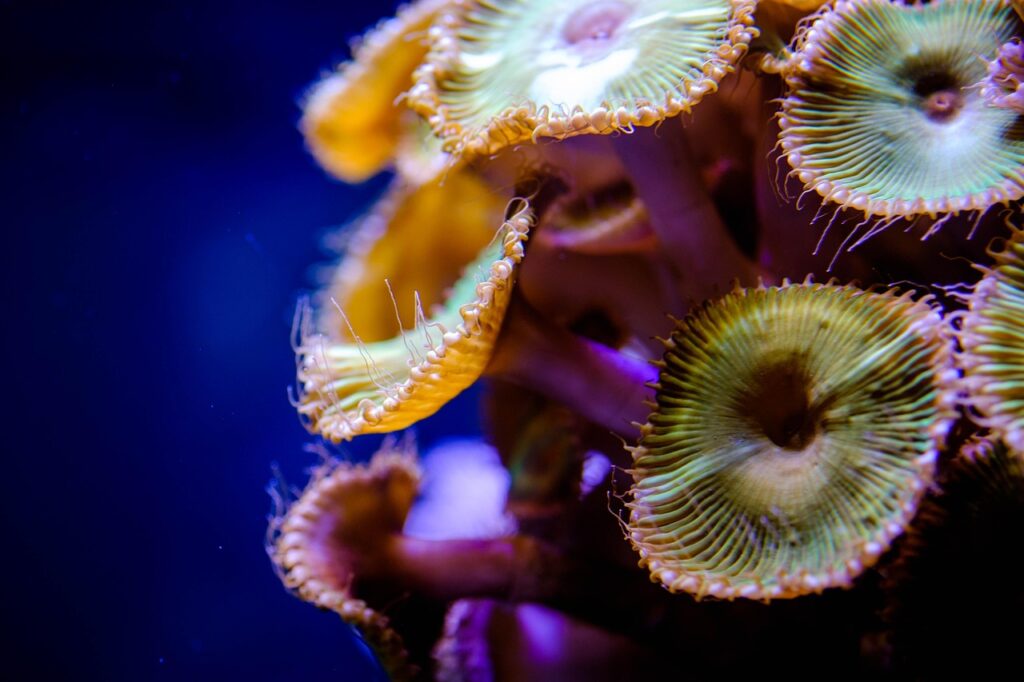
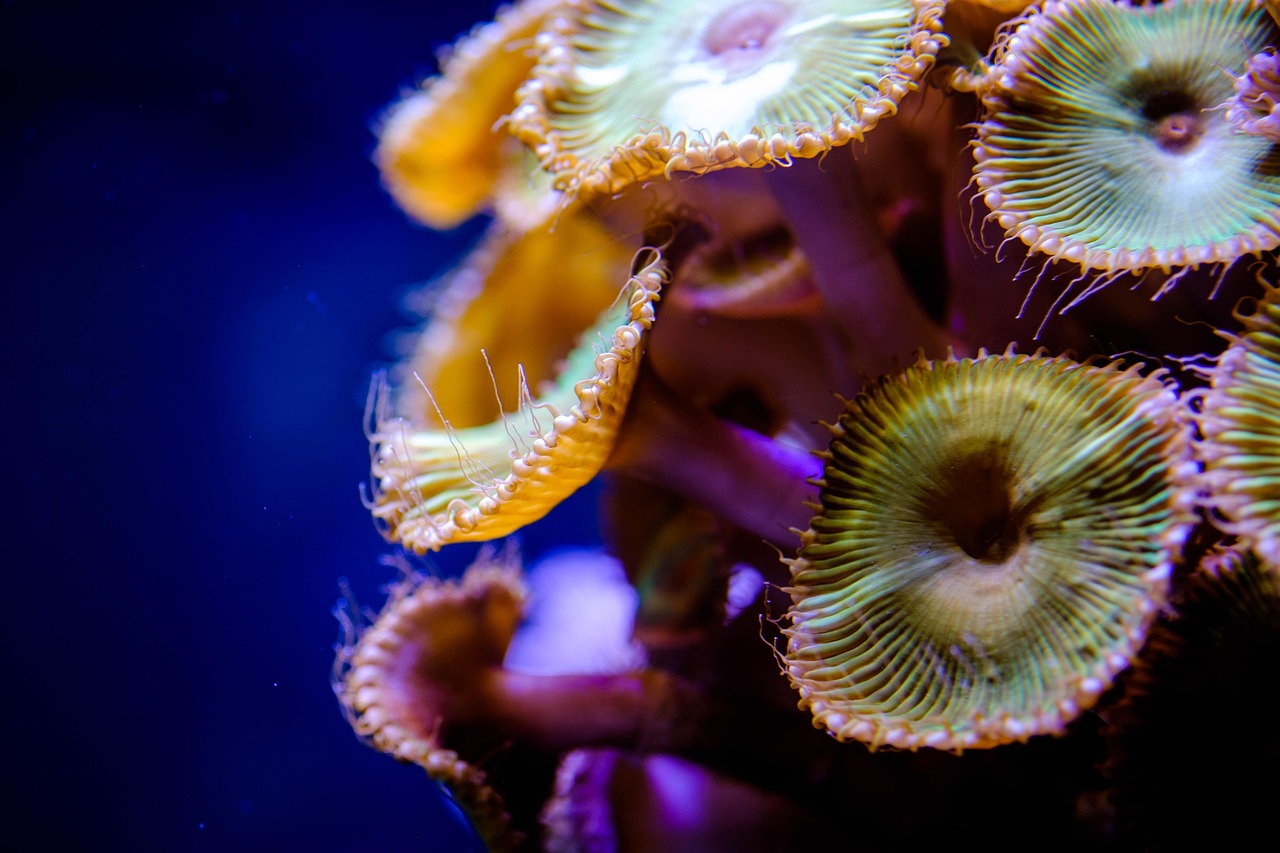
Soft corals like mushrooms, zoanthids, and leathers prefer low to moderate flow. They don’t need a direct blast. Too much flow causes them to retract and never fully open. Aim for gentle, indirect wave motion. If zoas pucker or leathers won’t extend, back the flow off.
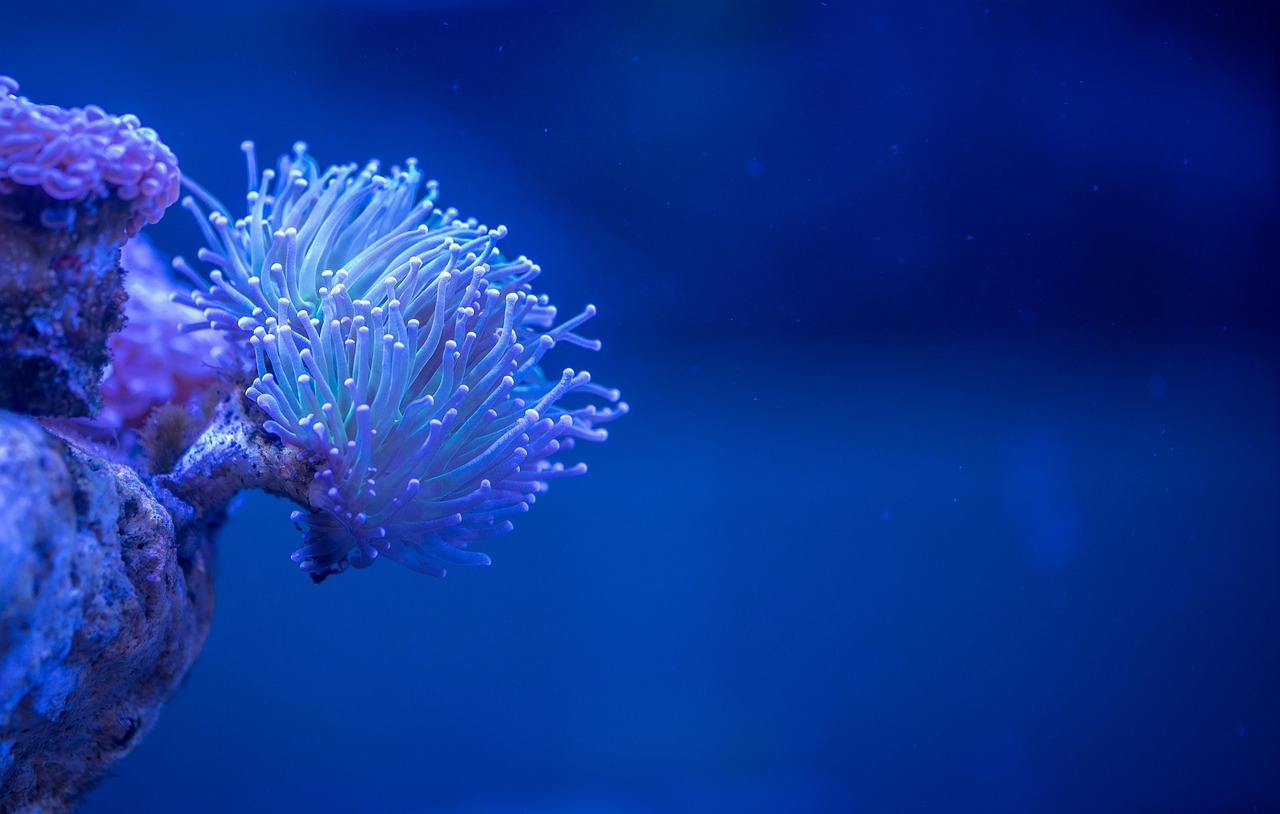
LPS corals fall in the middle. Torches, hammers, and frogspawn appreciate moderate flow that sways their tentacles gently. Some LPS with fleshy polyps actually like a bit more movement. But a direct high-flow pump can kill a delicate acan or goniopora. The key is wavy motion, not a jet stream. Watch tentacles: if they’re flapping violently, you’re overdoing it.
SPS corals like acropora, montipora, and stylophora need high, turbulent flow. They require intense water movement to shed boundary layers and take up nutrients. These corals look best when polyps wave in chaotic, random flow. If you’re keeping SPS, don’t be afraid to push 50x turnover or more.
Quick reference:
- Soft (mushrooms, zoas, leathers): 10–20x indirect flow
- LPS (torches, hammers, acans): 20–40x moderate wave
- SPS (acropora, montipora): 40–60x turbulent
One nuance: some LPS like lobophyllia or brain corals prefer lower flow because waste settles on their surface tissue. Don’t treat all LPS as one group. Watch your corals. They’ll tell you if they’re happy.

How to Calculate Reef Tank Flow Rate GPH
Let’s make this actionable. Here’s the step-by-step.
Step 1: Measure your tank’s actual water volume. A 75-gallon tank usually holds about 60 gallons after rock and sand displacement. Use rough figures or measure displacement for precision.
Step 2: Decide your desired turnover. Say you’re building an SPS-dominant system. Aim for 50x. 60 gallons à 50 = 3,000 GPH total flow.
Step 3: Account for return pump head loss. Return pumps lose flow pushing water up and through plumbing. A pump rated for 800 GPH at zero head might deliver 600 GPH after a 4-foot vertical rise and a few elbows. Subtract that from your target. In this example, 3,000 GPH minus 600 GPH from the return leaves 2,400 GPH needed from powerheads.
Step 4: Choose powerheads to make up the difference. Two Jebao OW-25s or a single Vortech MP40 can cover you. You’re not looking for one pump to do everything. Spread flow across the tank.
Head loss calculators are available online and worth using. A 10% loss assumption is safe for most setups, but accurate numbers save you from buying an undersized return pump. For those looking for a reliable return pump, a quality return pump rated appropriately makes a big difference.
Return Pump vs. Powerheads: What Provides the Flow?
There’s a common misconception that the return pump handles most flow. It doesn’t. In almost every setup, the return pump accounts for maybe 10–20% of total tank flow. Its main job is circulating water through the sump for filtration, not creating display flow.
Return pumps are limited by overflow box capacity. A standard 75-gallon tank’s overflow handles maybe 600–800 GPH before you hear gurgling or risk a flood. You can’t push 2,000 GPH through a single 1-inch drain. That’s physics.
Powerheads are where most display flow comes from. They sit inside the tank and move water directly where you need it. For a mixed reef or SPS tank, you’ll need at least two, often three, placed strategically.
For the return pump, stick with something rated for 5–10x your tank volume. It’s enough to move water through filtration without overwhelming your overflow. If you’re replacing one, look at options like the Sicce Syncra series or an EcoTech Vectra. They’re reliable and quiet. Checking options for a reef tank return pump is time well spent if you need a new one.
Best Powerheads for Reef Tank Flow in 2025
After years of testing pumps, here are the ones I’d put money on today.
| Pump | Max GPH | Control | Noise | Best For |
|---|---|---|---|---|
| EcoTech Vortech MP10 | 1,500 | Wireless, reef crest/lagoon modes | Very quiet | Small tanks (under 40g) |
| EcoTech Vortech MP40 | 3,000 | Full controller suite | Quiet | Medium to large mixed reefs |
| Nero 3 | 1,000 | App-based, simple modes | Quiet | Small SPS tanks or nano reefs |
| Nero 5 | 2,500 | App-based, wave and random | Moderate | Mid-size SPS or mixed reefs |
| Jebao OW-25 | 2,500 | Basic controller | Moderate | Budget builds, large soft coral tanks |
| Sicce Voyager 4 | 2,000 | None (fixed flow) | Very quiet | Supplemental flow or sump return |
The Vortech MP40 is the gold standard for a reason. Reliable, quiet, and wireless control is great for random flow. But it’s expensive. If you’re budget-conscious, the Jebao OW series offers decent flow for less. The Nero 5 is a solid middle ground with a good app but slightly louder operation.
For a small SPS tank, say 30 gallons, a Nero 3 at 40% plus your return is plenty. For a 120-gallon mixed reef, two Nero 5s or one MP40 plus a smaller unit on the opposite side hits the sweet spot. Browsing reef tank powerheads can help you compare options for larger setups.
Choosing the Right Flow Pattern: Random vs. Laminar
Not all flow is equal. Laminar flow is smooth and unidirectional—like a garden hose on low. Random flow is chaotic, swirling, and mimics natural reef conditions. Most corals, especially SPS, respond better to random flow because it prevents boundary layer buildup and delivers nutrients more evenly.
Wavemakers and modern powerheads come with built-in modes. “Reef crest” mode simulates surge waves at the reef flat. “Lagoon” mode delivers gentler wave motion. Pulse mode alternates between high and low. These modes create the random flow patterns your corals need.
Avoid pointing a powerhead directly at a single coral. It stresses them regardless of mode. Instead, aim pumps at the front glass or rockwork to create reflection and turbulence. Let flow bounce and disperse before hitting your corals.
If you’re starting out, set pumps to random mode at about 50% and watch how corals respond. Adjust from there.
Common Flow Mistakes to Avoid
I’ve made most of these myself. Here’s a quick list so you don’t have to.
Too little flow: Most common. Dead spots form, detritus settles, algae moves in. You notice cyano in low-flow corners. Fix it by adding a powerhead or repositioning existing ones.
Too much flow for soft corals: Blasting a mushroom or leather with high current stunts growth. They retract and stay closed. You wonder why the tank looks lifeless. Ease off if you’re keeping them.
Blasting sand: Pointing a powerhead straight at fine sand creates a sandstorm. Buries corals, scratches glass, clogs pumps. Angle pumps slightly upward or use a diffuser nozzle.
Placing pumps too close to corals: Direct, high-velocity flow on a single coral can cause tissue recession or bleaching. Especially LPS and SPS. Keep a few inches of distance, more if the coral is fragile.
Ignoring backflow: Return pumps without check valves or insufficient backup flow can drain your sump during power outages. Use a check valve or design plumbing to handle it. Related to return pump setup.

Mixing High and Low Flow Zones in One Tank
A mixed reef isn’t one flow zone. It’s a series of microclimates. Your goal is to create areas of high, moderate, and low flow so every coral finds its spot.
Place SPS on highest rockwork, directly in the path of main powerheads. They get maximum turbulence. LPS go on mid-level rocks where flow is indirect but steady. Soft corals near the sand bed or in caves and overhangs where flow is minimal.
Rockwork is your best tool. Use large, porous rock to create eddies and dead spots. Don’t stack rocks against the back glass—that kills flow behind them. Leave gaps and channels for water to move through. Especially important in smaller tanks where space is tight.
If you’re running powerheads on opposite sides, set them to alternate pulses. One high, one low. The flow pattern becomes chaotic, and different corals get different flow levels throughout the day. Simple trick that works well.
Wavemakers vs. DC Pumps vs. Fixed Flow
You have three main flow solutions: wavemakers, DC powerheads, and fixed AC pumps. Each has a place based on budget and goals.
Wavemakers like the Vortech or Nero are programmable and deliver random flow patterns. Ideal for SPS and mixed reefs. The controller sets wave frequency, intensity, and mode. They’re the most expensive but most flexible. If budget allows, this is the best choice for serious reefers.
DC powerheads like Jebao OW or Sicce Voyager offer adjustable flow but lack random modes. Set speed and that’s it. Quieter than AC pumps, cheaper than wavemakers. Good for soft or LPS tanks where random flow isn’t critical.
Fixed AC pumps are cheap workhorses. No controls, no modes, just constant flow. Work fine as supplemental flow or in sumps, but hard to tune for a display tank. You can use a mechanical timer to cycle them, but it’s clunky.
Decision quicklist:
- Best for flexibility: Wavemaker (Vortech, Nero)
- Best for quiet operation: DC powerhead (Sicce Voyager)
- Best for budget: Fixed AC pump (generic brand)
- Best for SPS: Wavemaker with reef crest mode
- Best for softies: DC powerhead on low
If you’re building a serious reef tank, invest in at least one wavemaker. The control is worth the money. Browsing wavemaker options for reef tanks can help you decide which model fits.
Recommended Flow Settings for Common Tank Sizes
Quick reference for popular tank sizes. Use as a starting point and adjust based on coral response.
| Tank Size | Total GPH Target | Recommended Setup |
|---|---|---|
| 20 gallon (cube) | 200–400 GPH | Nero 3 at 30% + return pump |
| 40 gallon (breeder) | 800–1,600 GPH | One Nero 5 at 40% + return |
| 75 gallon | 2,000–3,000 GPH | Two Nero 5s or one MP40 at 60% |
| 120 gallon | 3,500–5,000 GPH | Two MP40s or one MP60 at 70% |
| 200 gallon | 6,000–10,000 GPH | Three MP60s or a flow loop system |
These numbers assume mixed reefs. For SPS-only, lean toward the high end. Soft coral tanks can drop 30% lower. Setup suggestions include a return pump at 5–10x tank volume. In practice, the return pump accounts for about 10–20% of that total target.
Conclusion: Finding Your Reef Tank’s Sweet Spot
Flow is one of the most adjustable parameters in a reef tank. Start with a target based on your coral type, calculate your reef tank flow rate GPH using the steps above, and watch how your corals respond. You’ll know you’re in the sweet spot when polyps extend fully, detritus stays suspended, and you don’t see dead spots where algae collects.
If you’re setting up a new tank, start conservative. Easier to add flow than reduce it. If existing corals are stressed, dial back. Every system is different, but the principles hold.
Ready to gear up? Browse the powerheads mentioned here for your tank size. The right flow setup makes your reef healthier and less work to maintain. If you want a deeper look at return pump options, that’s another guide. For now, focus on getting flow right. Your corals will thank you.