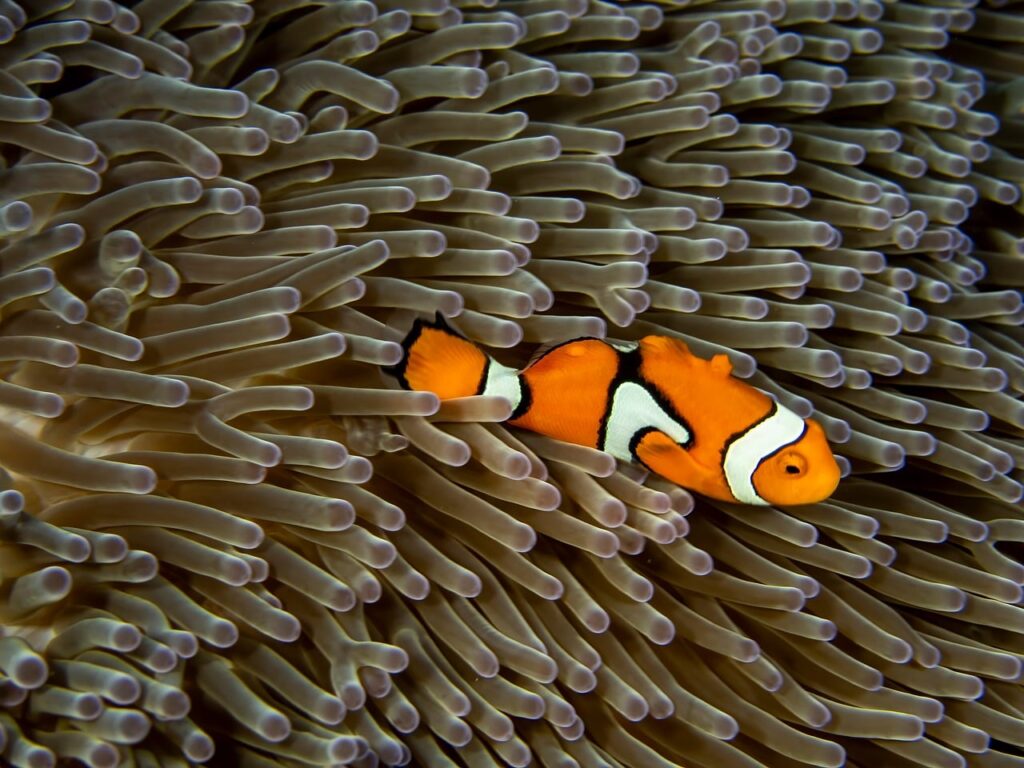
Introduction
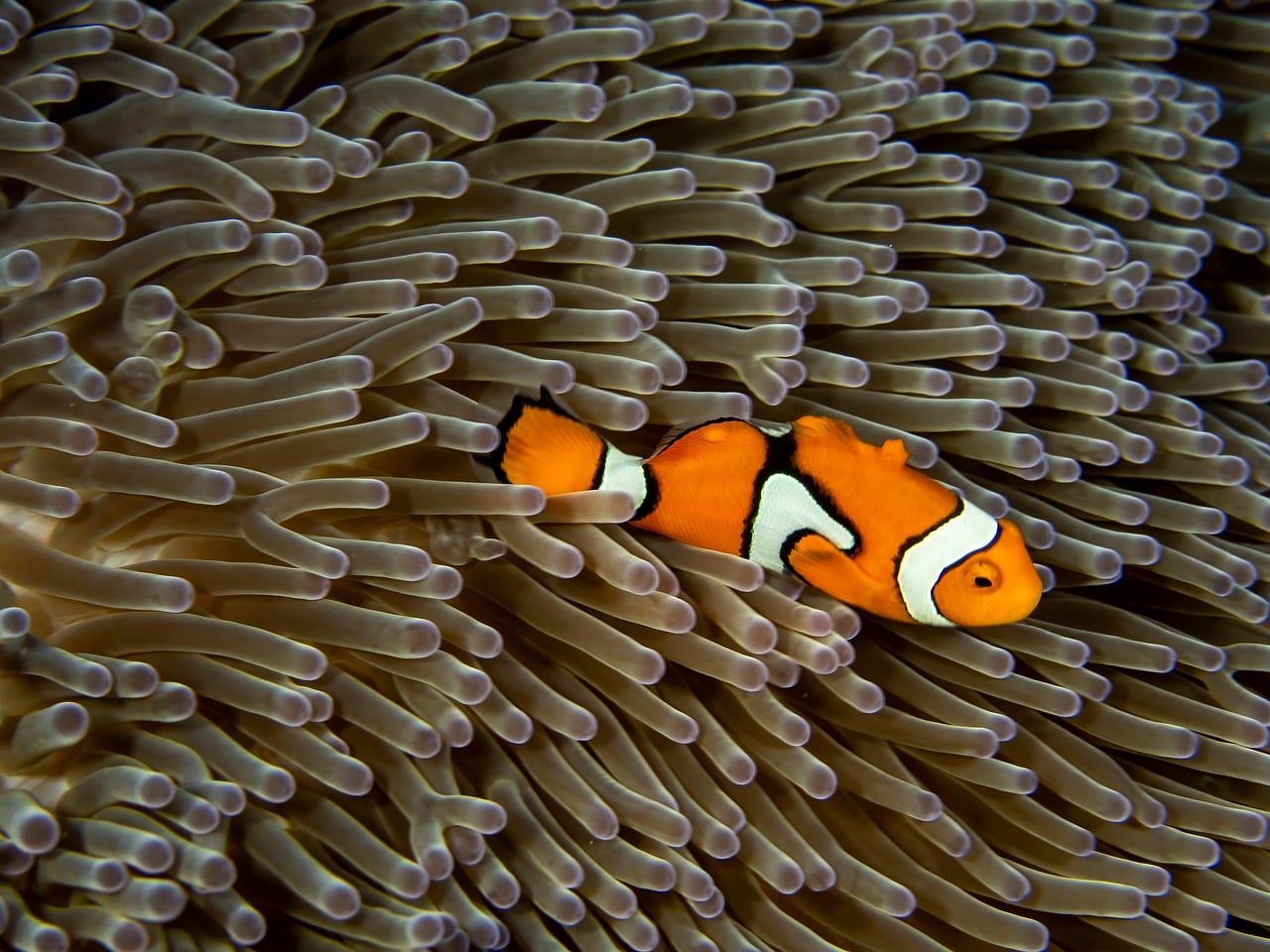
If you are researching Papua New Guinea clownfish diving, you already know the Pacific has plenty of options. PNG sits in a different league. This is the Coral Triangle’s bullseye, where clownfish diversity levels make the Philippines or Indonesia look like teasers. You are not coming here for travel poster shots. You are coming because this region holds some of the highest anemonefish endemism on the planet. From steep reef walls in Kimbe Bay to muck sites in Milne Bay, the variety is stunning. This article covers where to go, what species to expect, when to book, and what gear you actually need. It is written for divers who want to plan a serious trip, not a casual vacation.

Why Papua New Guinea for Clownfish Diving?
PNG sits at the heart of the Coral Triangle, an area with the highest marine biodiversity on earth. The currents here are strong and varied, pulling nutrient-rich water through channels and past volcanic headlands. That nutrient load fuels massive anemone beds. Most clownfish in the Indo-Pacific are tied to specific host anemones, and PNG has the density of both to support multiple species on a single dive. You will find skunk clownfish (Amphiprion perideraion) alongside the rare white-bonnet clownfish (Amphiprion leucokranos) on the same reef. That does not happen in Thailand.
Compare this to Indonesia, which has high species count but spreads them across vast reef systems. PNG packs more species into smaller areas because the habitat diversity is extreme. You can go from a steep wall covered in giant anemones to a sand slope with solitary anemones in under 200 meters. It is not easy diving. Currents can be strong. Remote sites require planning. But the payoff is unmatched for anyone serious about seeing rare clownfish in their natural environment.
Top Dive Sites for Maximum Clownfish Encounters
Milne Bay
Milne Bay is the macro and clownfish capital of PNG. The muck sites along the mainland coast hold high densities of Heteractis magnifica and Stichodactyla gigantea, which host species like the tomato clownfish and the pink anemonefish. Dinah’s Beach is a standout. You will find the Papua clownfish (A. leucokranos) in giant carpets of S. gigantea at 10 to 18 meters. Currents are mild but visibility drops after rain. Best conditions are May to October. Water temperature sits around 27°C to 29°C. Access is via liveaboard or day boat from Alotau.
Kimbe Bay
Kimbe Bay is wall diving at its best. The reef drop-offs here are covered in Entacmaea quadricolor anemones, which host false clownfish and the occasional maroon clownfish. Sites like South Emma’s and Bradford’s Shoals have strong currents that concentrate nutrient flow. Expect larger schools of anemonefish and massive individual specimens. Visibility averages 20–30 meters. Best times are November to April. Kimbe Bay is mostly accessed via liveaboard, but Walindi Plantation Resort offers day trips with nitrox. Divers who need a reliable dive computer for these shifting conditions may want to consider a model with a clear display for monitoring no-deco limits easily. You can browse dive computers online.
Tufi
Tufi is known for its fjords and steep walls. The clownfish here are less common in numbers but more specialized. Look for Amphiprion melanopus at the entrance of the fjords where the water mixes. Depth range is 5 to 25 meters. Visibility can drop in the fjords due to tannin runoff, but the open reef sites are clear. Water temperature is cooler, around 24°C to 26°C, so a 5mm wetsuit is needed. Tufi Dive Resort is the main base. It offers guided dives and a house reef that holds tomato and skunk clownfish.
Lissenung Island
Lissenung Island is a small resort island with an excellent house reef. The site called “The Point” has Stichodactyla gigantea at 6 to 12 meters, hosting both false clownfish and pink anemonefish. The reef is shallow and sheltered, making it ideal for long bottom times. Currents are mild. The resort is relaxed and focuses on macro photography. It is a good base for beginners or anyone who wants repetitive dives on the same reef to track specific anemonefish behavior. Access is via a short boat from Kavieng.
Kavieng
Kavieng has sites like Albatross Passage and Nusa Island that offer good clownfish encounters. The passages have strong currents that pull in nutrients, attracting large anemone beds. Depth range is 10 to 30 meters. Water temperature is around 28°C. This area is good for mixed dives: clownfish on walls, but also pelagic activity. A compact camera with a macro lens is essential here. Divers frequently rely on the Olympus TG-6 for these conditions.
Clownfish Species You Can Expect to See
Here is a practical breakdown of the species you are most likely to encounter on a PNG dive trip. This is not a complete checklist, but it covers the ones you should plan for.
- True clownfish (Amphiprion percula) – The classic orange-and-white fish. Hosts in Heteractis magnifica or Stichodactyla gigantea at 5–20 meters. More territorial than the false clownfish. Found throughout PNG but especially in Kimbe Bay.
- False clownfish (Amphiprion ocellaris) – Extremely similar to the true clownfish but more tolerant of other fish. Hosts in the same anemones. Found in Milne Bay and Tufi.
- Pink anemonefish (Amphiprion perideraion) – A pale pink fish with a white stripe down the side. Hosts exclusively in Heteractis magnifica. Common in Milne Bay and Lissenung Island. Depth 6–18 meters.
- Papua clownfish (Amphiprion leucokranos) – Rare and distinctive. White body with orange fins. Hosts in Stichodactyla gigantea. I consistently found them at Dinah’s Beach in Milne Bay at around 12 meters. Aggressive toward divers who get too close.
- Maroon clownfish (Premnas biaculeatus) – Dark maroon body with yellow stripes. Hosts in Entacmaea quadricolor. More common in Kimbe Bay and at deeper reef slopes. Very aggressive. Depth 10–25 meters.
- Tomato clownfish (Amphiprion frenatus) – Bright red-orange with a single white bar. Hosts in Entacmaea quadricolor. Found in sheltered bays and muck sites in Milne Bay. Depth 5–15 meters.
- Clark’s anemonefish (Amphiprion clarkii) – Extremely adaptable black and yellow fish found in many anemone species. Common everywhere in PNG. Depth 3–25 meters. A safe bet for any dive.
- Orange-fin anemonefish (Amphiprion chrysopterus) – Orange body with white or yellow fins. Hosts in Heteractis aurora and Stichodactyla mertensii. Found in PNG but less common. Look at Tufi and Kavieng at 10–20 meters.
Behavioral note: Maroon clownfish are significantly more aggressive than skunk or tomato species. Give them space when photographing or you will get nipped. Also, do not assume that a single anemone only has one species. In PNG, you can sometimes find two species sharing the same anemone bed, especially in Milne Bay where anemones are large.
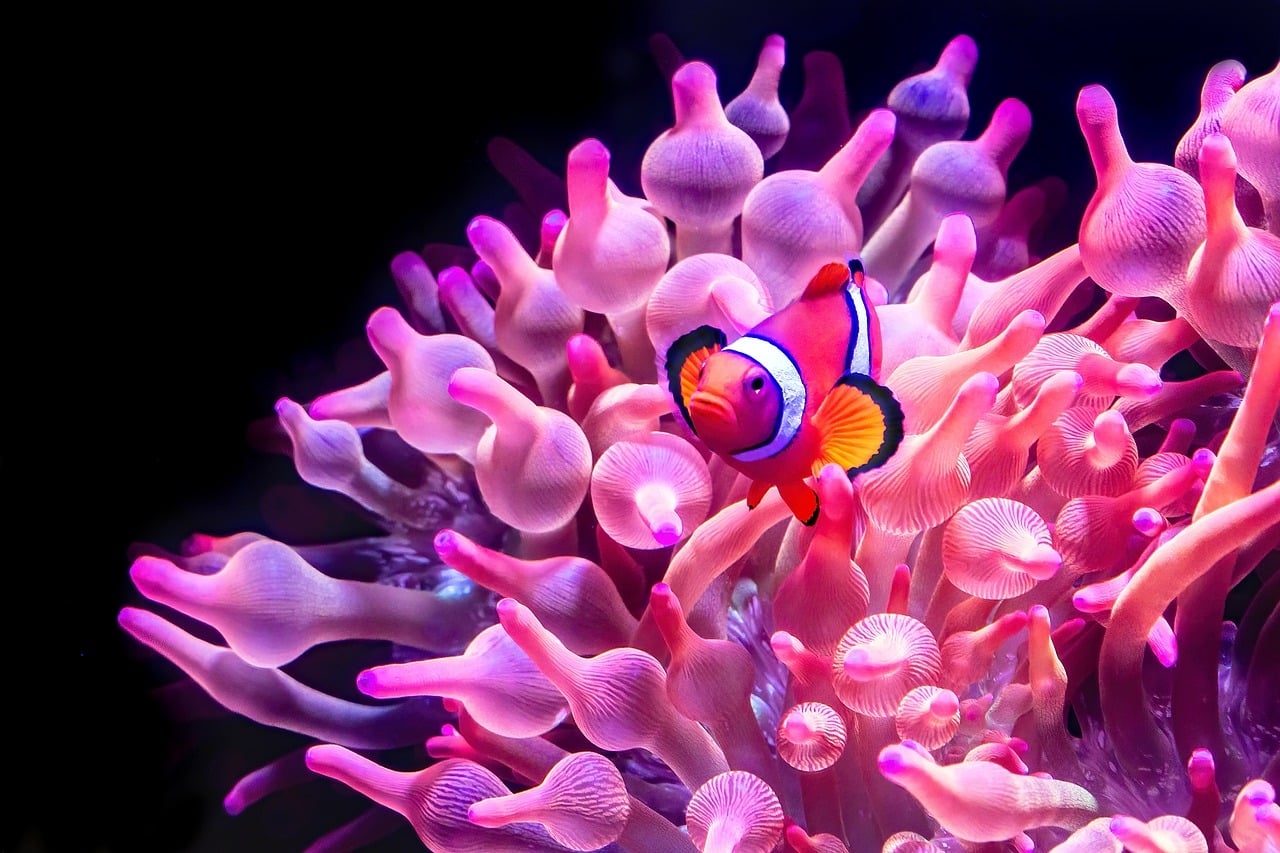

Best Time of Year to Dive for Clownfish Viewing
Timing matters because visibility and current strength directly affect how easy it is to find and photograph clownfish. Here is the seasonal breakdown by region.
Milne Bay – Best from May to October. This is the dry season. Visibility averages 15–25 meters. Rain in the wet season (November to April) causes runoff that can drop visibility to 5 meters, making it hard to spot S. gigantea carpets. However, the wet season has less current, so if you are okay with lower visibility, you can still have good encounters.
Kimbe Bay – Best from November to April. The southeast trade winds in May–October create stronger currents and occasional swells. The anemonefish are still here, but finding them in the current is tiring. November to April has lighter winds and better visibility (20–30 meters).
Tufi – Best from June to December. The fjords have tannin runoff year-round, so open reef sites are more reliable. Water temperature drops to 24°C in August and September. Clownfish become more active in the slightly warmer months (January–March) but visibility may be lower.
Kavieng and Lissenung – Best from April to November. The trade winds bring cooler water and plankton blooms, which feed anemones and attract more clownfish. Visibility is stable at 15–20 meters. The blooms can reduce visibility in early morning, but late afternoon dives are usually clearer.
A note on upwelling: In PNG, seasonal upwelling events concentrate nutrients at specific depths. These events increase the number of host anemones in the affected area for several weeks. If you time your trip for the onset of the dry season (May or November), you may hit these nutrient pulses. Check local dive reports a month before your trip.
Liveaboard vs. Land-Based Diving for Clownfish Photography
The choice between liveaboard and land-based diving depends on your priority: access vs. consistency.
Liveaboard – You get 4–5 dives per day, including night dives. You can cover multiple sites in Kimbe Bay or Milne Bay that are hours apart by boat. For clownfish photography, this is ideal because you can target specific anemone beds without the time constraints of a return trip. The downside is longer surface intervals and less flexibility to return to a site if you miss a shot. Liveaboards are better for experienced divers who can handle strong currents and variable visibility. Budget around $400–$700 per day, including meals and gear rental. If you book a liveaboard, a reliable dive computer is a practical investment. Many divers choose the Shearwater Peregrine for its simple interface and long battery life. You can compare prices online.
Land-based – Resorts like Tufi Dive Resort, Walindi Plantation Resort, and Lissenung Island Resort offer 3–4 dives per day, with shorter surface intervals if you stay on site. The big advantage is the house reef. You can do a dawn dive, a mid-morning dive, a night dive, and repeat on the same reef. This is excellent for macro photography of clownfish, especially if you want to track a specific anemone for optimal lighting. Land-based also is kinder on the budget, with packages ranging from $200–$400 per day. The tradeoff is you see fewer distinct sites, but the quality of each site can be higher because you know it intimately.
Who should choose which – If you are a macro photographer who wants multiple passes at the same subject, go land-based. If you are a species lister or want to see the widest variety of anemones in a week, go liveaboard. For most advanced divers, a liveaboard in Kimbe Bay combined with a few days at Tufi is the optimal setup.
Essential Gear for Clownfish Diving in PNG
PNG diving is not forgiving. You need gear that handles current, variable temperatures, and muck conditions. Here is the essential list.
- Dive computer – Currents can change fast. A good computer with a bright display and easy-to-read no-deco limits is critical. Many divers recommend either a Suunto D5 for its compact size or a Shearwater Peregrine for its simplicity. Both can handle nitrox, which is often available on liveaboards. Do not skimp here; a cheap computer can get you bent in a hurry.
- Reef-safe sunscreen – PNG has strict regulations. Avoid oxybenzone. Use a mineral-based sunscreen like Stream2Sea. It is heavier but effective. You can check options for reef-safe sunscreen.
- Compact camera with macro lens – The Olympus TG-6 is the standard for underwater diving. Its macro mode captures clownfish in high detail. A macro lens attachment can help you get even closer. For strobes, the SeaLife Sea Dragon is a popular choice for reducing backscatter.
- Thick wetsuit – Water temperature ranges from 24°C (Tufi) to 29°C (Milne Bay in summer). In cooler months, a 7mm wetsuit or 5mm with a hooded vest is advisable. Do not rely on a 3mm. You will get cold, especially on surface intervals.
- Spare O-rings and batteries – These are hard to find in remote PNG. Bring at least 10 spare O-rings in various sizes for your camera housing. Also pack lithium batteries for your flash or strobe.
- Surface marker buoy (SMB) – Many sites have strong currents. A large, brightly colored SMB is mandatory. Practice deploying it before your trip.
Common Mistakes to Avoid When Planning Your Trip
These are mistakes I see divers make in PNG every year. Avoid them.
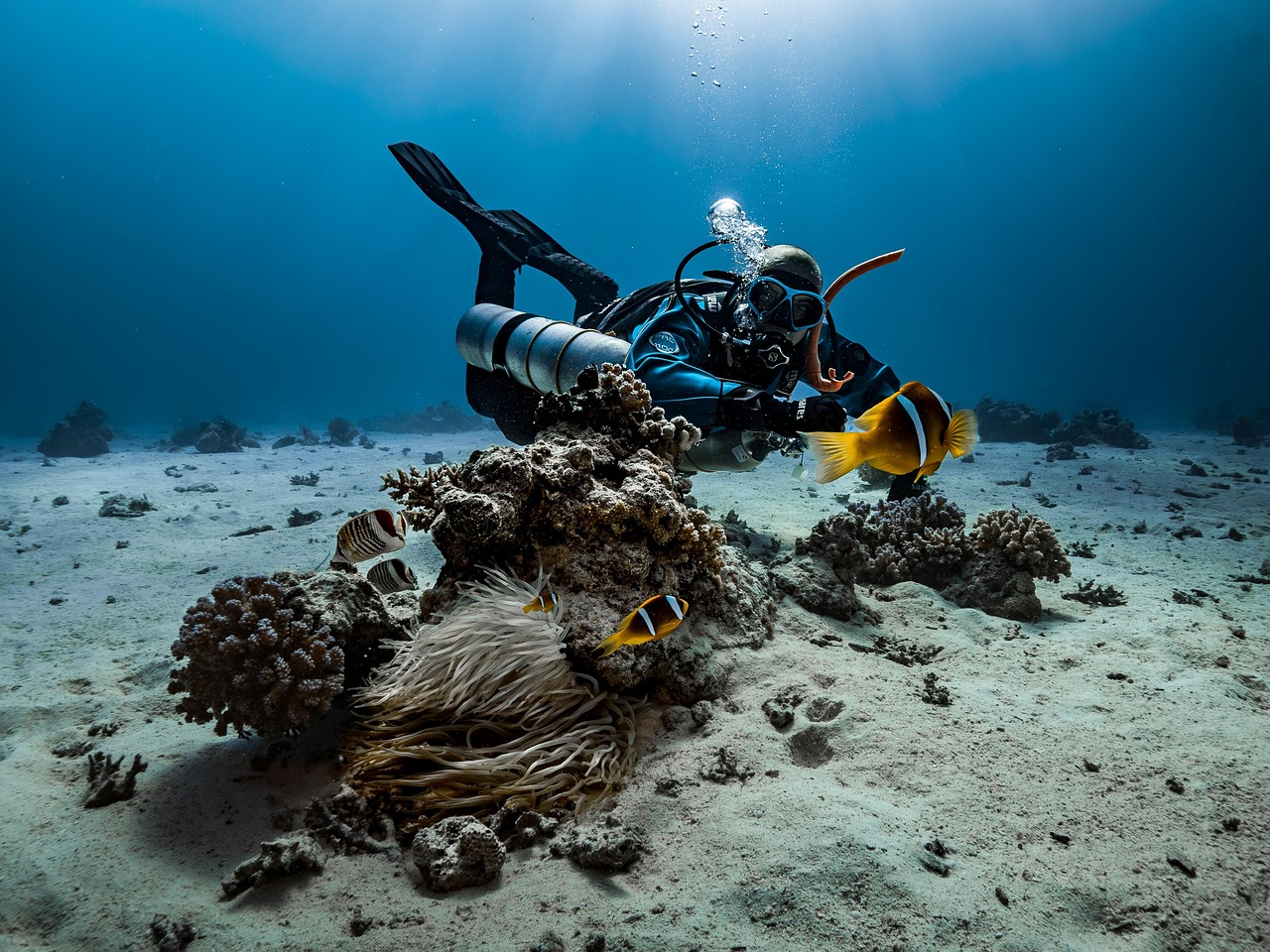
- Not booking domestic flights early – PNG domestic flights are limited and expensive. Booking three to four months in advance can save you 20–30%. Last-minute flights from Port Moresby to Alotau or Kavieng can cost over $400 each way. Plan ahead.
- Underestimating dive intervals due to remote locations – On a liveaboard in Kimbe Bay, the nearest recompression chamber is in Port Moresby, a 2-hour flight away. Plan your dives conservatively. Do not push NDLs. Use your dive computer religiously.
- Forgetting spare O-rings and batteries – As mentioned, these are not available at dive shops in PNG. A single broken O-ring can end your photography session. Bring backups.
- Ignoring dive operator insurance requirements – Some operators require specific dive accident insurance, like DAN or Dive Assure. Verify before you arrive. You do not want to be turned away at the dock.
- Not acclimatizing to local time properly – PNG is UTC+10 or UTC+11. Jet lag combined with early morning dives (6 AM boat departures) is tough. Arrive at least 2 days early before diving to adjust. You will be sharper and safer.
Accommodations That Cater to Serious Divers
You want a dive resort that understands serious guests. Here are three I trust.
Lissenung Island Resort – Near Kavieng. Excellent house reef with good clownfish populations. Offers nitrox, camera rinse tanks, and a photo-friendly atmosphere. The reef is shallow, so bottom times are long. Ideal for macro photographers.
Walindi Plantation Resort – In Kimbe Bay. Access to world-class wall dives. Nitrox available. They have a dedicated camera room with charging stations. The house reef is decent for clownfish but the real value is day trips to sites like South Emma’s. Best for liveaboard-style experience from a resort base.
Tufi Dive Resort – Built for divers. The house reef holds skunk and tomato clownfish. They offer guided dives and night dives on the reef. The resort is very remote, so all gear is included in packages. Their macro room has workstations for photographers.

Photography Tips for Clownfish in Their Anemone Hosts
Shooting clownfish in their anemone hosts requires specific techniques. Here is what works.
- Lighting – Use strobes to reduce backscatter. Position your strobes at 45 degrees to the subject, not directly in front. This prevents the anemone tentacles from lighting up as white blobs. A diffuser on your strobe helps soften the light.
- Focus – Focus on the eye of the clownfish, not the anemone. If you autofocus on the tentacles, the fish will be soft. Use single-point AF and recompose if needed.
- White balance – Use a manual white balance card at depth. The pink and orange hues of clownfish are subtle, and auto white balance in poor visibility washes them out. Manual WB gives you true color.
- Composition – Include the anemone to show the habitat. Get low and shoot slightly upward to separate the fish from the background. In strong currents, use a high shutter speed (1/200) to freeze movement. I often shoot from a slight downward angle to catch the clownfish emerging from the tentacles. This creates a natural frame.
- Backscatter – In muck conditions (Milne Bay), backscatter is worse. Use a single strobe to light the subject and keep the water column dark. Or use a snoot to isolate the clownfish.
A good strobe for these conditions is the SeaLife Sea Dragon Mini. It is compact and powerful enough for macro work. For photographers, a compact underwater camera like the Olympus TG-6 is a practical choice, and a wide selection is available.
Budgeting Your Papua New Guinea Clownfish Diving Trip
Here is a realistic cost estimate for a week-long dive trip focusing on clownfish.
- International flights – $1,200–$2,000 from the US to Port Moresby.
- Domestic flights – $300–$600 per leg to Alotau, Kavieng, or Hoskins.
- Liveaboard or resort package – $2,800–$5,600 for a 7-day package (includes meals, diving, and accommodation).
- Park fees and permits – $100–$200.
- Gear rental – $150–$300 for the week if you need a BCD, regulator, and computer.
- Tips – $100–$200 for crew.
- Total range – $4,500 to $8,000 for a week. The biggest variable is flights and whether you choose a liveaboard or resort. Booking early can save 15–20% on the package. Most operators offer discounts for bookings 6+ months out.
The cost is high, but the payoff in species diversity is worth it. If you budget carefully, this trip is feasible for a serious diver who saves strategically.
Is Papua New Guinea Clownfish Diving Right for You?
Best for:
- Experienced divers seeking rare species (Papua clownfish, orange-fin anemonefish).
- Underwater photographers who want to capture clownfish in their natural anemone habitat with minimal crowds.
- Macro enthusiasts who appreciate the intense density of tiny subjects in muck and wall environments.
Not for:
- Beginners or divers with less than 30 logged dives. The currents and remote locations require solid buoyancy and situational awareness.
- Divers on a tight schedule who cannot afford time for domestic transfers. Adding extra days is part of the plan.
- Anyone wanting easy boat entries and crystal-clear visibility every day. PNG delivers gin-clear water one dive and a tannin runoff the next. That is part of its charm.
If you fit the “best for” category, start planning. If not, consider a different destination first, then come back to PNG when you are ready.
Final Recommendations
Papua New Guinea is the world’s best destination for serious clownfish diving. The biodiversity density is unmatched. You will see species in a week that take a month to find in Indonesia. But it demands preparation. Come with a macro setup, a reliable dive computer, and a realistic budget. Respect the currents. Book domestic flights early. Trust that the remote reefs will deliver. Your PNG clownfish diving trip starts now. Plan well, dive smart, and enjoy the absolute best of the Coral Triangle.