LED vs T5 vs Metal Halide: Reef Lighting Showdown
Introduction
If you’re planning a reef tank upgrade or a new build, picking the right light is one of the bigger decisions you’ll face. The LED vs T5 vs metal halide reef debate has been around for years, and for good reason—each technology grows corals, but they do it very differently. This article breaks down the real-world tradeoffs between these three lighting types, focusing on what actually matters for coral health, your electricity bill, and your long-term satisfaction. Whether you’re keeping softies, LPS, or an SPS-dominant system, understanding these differences will save you money and frustration. Let’s get into it.

Why Reef Lighting Matters More Than You Think
Light isn’t just about making your tank look good. It’s the primary energy source for the zooxanthellae living inside your coral tissue. Without adequate light intensity (measured in PAR) and the right spectrum (photosynthetically active radiation), corals won’t grow, will lose color, and can eventually die. Poor lighting choices lead to common problems: nuisance algae blooms from too much or too little light, slow growth on SPS, and bleaching on sensitive acropora. Beyond biology, lighting is a long-term investment. A cheap fixture might save you $200 upfront but cost you hundreds more in electricity and bulb replacements over five years. For those looking to avoid later expenses, a quality reef light fixture is a wise upfront choice. Getting this decision right from the start means fewer headaches and a thriving reef.
A Quick Overview: How Each Technology Works
LED (Light Emitting Diode): LEDs produce light by passing current through a semiconductor. In reef tanks, they’re usually arranged in arrays of multiple diodes. They offer programmability—ramping up/down, color channels, and even remote control. Most LED fixtures run between 100-300 watts for a standard 4-foot tank and have a lifespan of 5+ years before needing replacement. They run cool and use the least electricity per photon output.
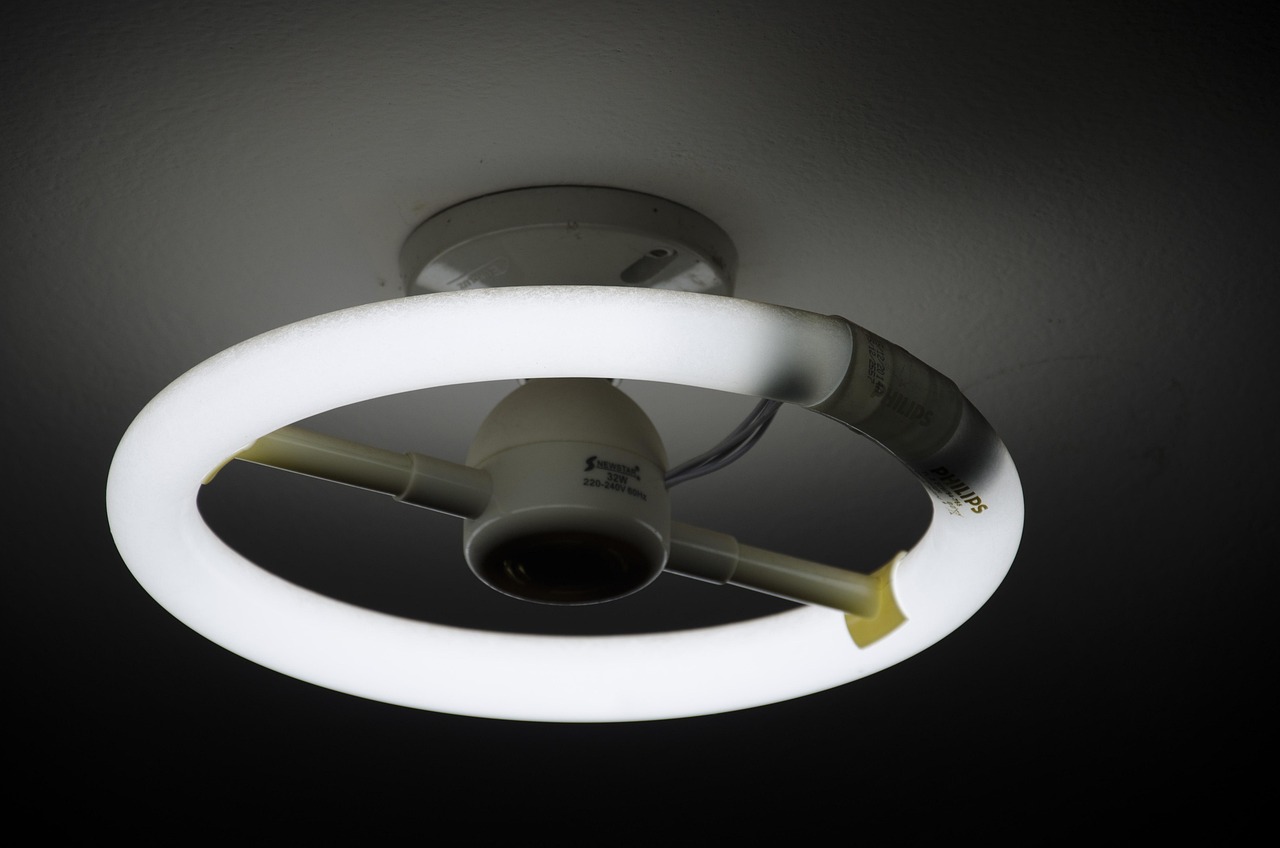
T5 Fluorescent: These are linear tubes filled with gas that emits UV light, which excites a phosphor coating to produce visible light. T5s are efficient for their output, and you typically run 6-8 bulbs over a 48-inch tank. Each bulb lasts 9-12 months before degrading. Fixtures are relatively affordable, and bulb replacement is straightforward. They produce excellent, even coverage with no shimmer.
Metal Halide: MH uses an arc tube filled with metal halide salts and gas. When an electrical arc passes through, it produces intense, broad-spectrum light. A single 250W or 400W MH bulb can penetrate deep into a tank, creating a beautiful natural shimmer. Bulbs need replacing every 6-12 months, and the fixtures run very hot. They’re the most power-hungry option.
LED vs T5 vs Metal Halide: Initial Cost and Long-Term Value
For a standard 48x24x24-inch tank (roughly 120 gallons), here’s a realistic cost breakdown:
- LED: Fixtures range from $300 to $1,500. A quality unit like the Radion XR30 or Kessil AP700 runs $600-$800. No bulb replacement needed for years. Electricity cost: roughly $40-80/year depending on wattage.
- T5: A 6-8 bulb fixture costs $150-$400. Bulbs ($10-$20 each) need replacement every 9-12 months, so $60-$160/year. Electricity: around $80-$120/year for 8 bulbs.
- Metal Halide: Fixtures with reflectors run $200-$600. Bulbs ($50-$100) need replacement every 6-12 months, so $100-$200/year. Plus, you’ll likely need a chiller ($300-$600) because of the heat. Electricity: $150-$250/year for dual 250W units.
T5 is the short-term winner—low upfront cost. But over five years, LED is almost always cheaper because of bulb savings and lower electricity. MH is the most expensive to run over time. For someone planning a long-term reef, LED makes the most financial sense unless you specifically want the look or growth of MH.

Light Coverage and Penetration: Which One Fills Your Tank Best?
Coverage depends heavily on your tank dimensions. For a standard 48x24x24, here’s what to expect:
- LEDs: Single units have narrow spread, often creating problematic ‘spotlighting.’ You need multiple units or a fixture with wide optics. Even with good fixtures, you’ll see hot spots under the LEDs and drop-off at the edges. Ideal for column tanks or well-planned arrays.
- T5s: The even spread across the entire tank is the best. With individual reflectors per bulb, you get uniform PAR from front to back. Great for mixed reefs. No shadowing issues.
- Metal Halides: Excellent penetration. A single 250W MH can blast PAR at 24 inches deep. But coverage is narrow—you need multiple pendants for a wide tank. This means more equipment and heat.
Practical tip: If you’re keeping SPS that need high light, you need intensity and penetration. T5 is forgiving for spread; MH is best for depth; LED requires careful placement and optics. For a mixed reef with softies and LPS, T5 is the safest bet for even coverage. A T5 reef light fixture is a solid choice for broad, even lighting.
Spectrum and Color Rendition: What You See vs What Corals Need
This is where personal preference really kicks in. Here’s the reality:
- LEDs: You have total control. Most fixtures let you adjust blue, white, and even UV channels. This allows you to create that deep blue ‘pop’ look that fluoresces corals beautifully. However, cheap LEDs often have poor spectrum balance, leading to washed-out colors. Quality fixtures like Radions or Hydras offer excellent color rendition, but you’ll pay for it.
- T5s: They come in many bulb colors—10,000K, 14,000K, actinic, blue plus, etc. You can mix and match to get the look you want. The spectrum is broad and natural, which many hobbyists prefer for viewing. Corals look more like they do in the wild under a mix of 10K and actinic.
- Metal Halides: Produce a very natural shimmer effect—almost like sunlight underwater. However, they run warm (10K-14K) and can look yellow without supplemental actinic. Corals often grow faster under MH, but the aesthetic can be harsh if not balanced.
What matters most? Corals need blue spectrum for growth—most LEDs and T5s provide this. The ‘pop’ you see is due to fluorescence, not light intensity. Both can look stunning. Don’t chase the hottest look; prioritize a spectrum that supports photosynthesis first.
Heat, Noise, and Equipment Considerations
This is a bigger deal than most beginners realize:
- Metal Halide: Runs hot. Heat output can raise your tank temperature by 3-5°F. In a warm room or basement, you’ll almost certainly need a chiller—another $300-$600. Ballasts can hum, and fans are common. This is the noisiest option.
- T5s: Very low heat. A 6-bulb fixture adds negligible heat. Running quiet with no fans (though some fixtures have passive cooling). Ideal for living rooms or bedrooms.
- LEDs: Coolest running. Most heat is dissipated through the fixture’s heatsink or fans. Fans can be noisy on lower-end models. High-end LEDs use passive cooling (quiet) or fine-tuned fans. Overall, LEDs are the best for temperature stability.
If your tank is in a basement, heat from MH can actually help stabilize temperature in winter. In a living room, it’s usually a problem. T5 and LED win for heat management.
Coral Growth Comparison: What the Research and Hobbyists Say
This is where opinions vary widely. Here’s the honest breakdown:
- Metal Halide: Historically, SPS growers saw the fastest growth under MH. The intense, broad-spectrum light promotes rapid calcification. However, it also bleaches corals if too close. Many top SPS tanks still use MH, often combined with T5.
- T5s: Excellent all-around growth. Many hobbyists report equal or better growth than MH when using high-quality bulbs and reflectors. T5s promote good coloration without the risk of bleaching. They’re forgiving—easier for beginners to get right.
- LEDs: Growth can be exceptional but is more dependent on fixture quality and placement. Cheap LEDs often have poor spectrum and low PAR. High-end fixtures (Radion, Kessil, Hydra) produce fantastic growth. Some corals actually color up better under LED due to spectrum control.
The trend today is combining LED with T5—using LED for shimmer and spectrum control, with T5 for even baseline PAR. Many contest-winning tanks use this hybrid approach. If you’re starting out, don’t overcomplicate it. A quality LED reef light for coral or T5-only setup can grow almost anything.
Common Mistakes When Choosing Reef Lighting
Here are the pitfalls I see most often:
- Buying too little light. One small LED panel over a 4-foot SPS tank won’t cut it. You’ll end up with patchy growth and pale corals. Measure your tank’s footprint and buy a fixture rated for that size or bigger.
- Ignoring bulb age on T5 and MH. T5 bulbs lose 20-30% of their PAR output within 9 months, even if they still look bright. MH bulbs shift spectrum and lose intensity. Replace them on schedule—don’t stretch it past a year.
- Choosing a cheap LED that lacks adjustability. A $50 LED fixture from Amazon will not grow corals. Look for dimmable, channel-controllable units with a proven track record (Radion, Kessil, Hydra, or even Noopsyche for budget). Save until you can afford quality.
- Assuming all LEDs are equal. Spectrum and PAR output vary wildly. A 100W LED from one brand might output 200 PAR at 12 inches, while another outputs 50. Read reviews and look for PAR maps before buying.
Fix these mistakes early, and you’ll avoid wasted money and frustration.
What Should You Choose? Recommendations by Tank Type
Here’s practical guidance based on common scenarios:
- Nano Reef (under 20 gallons, soft corals/LPS, budget $50-$100): A single modest LED like a Kessil A80 or AquaIllumination Prime will work. Skip T5 and MH—overkill and too hot for a small tank.
- Mixed Reef (40-75 gallons, mostly LPS + some SPS, budget $300-$600): A 6-bulb T5 fixture (e.g., ATI Sunpower) is the safe, reliable choice. Or, try an LED+T5 hybrid: a Radion XR30 with two T5 bulbs. This gives you control and even coverage.
- Large SPS-Dominant System (120+ gallons, high growth demands, budget $800-$2,000): Go with a quality LED array (e.g., two Radion XR30s) or a T5/LED hybrid. For pure growth, a 2x250W MH + T5 combo is tried and true, but expect higher electric bills and heat issues.
- Budget-Friendly (any size, tight budget): A used setup is your friend. Check forums for used T5 fixtures or older MH pendants. Many hobbyists upgrade, so deals exist. Just replace the bulbs.
If I had to pick one that works for most, it’s a quality programmable LED reef light fixture for its control and long-term savings. But if you value simplicity and even coverage, T5 is hard to beat.
LED vs T5 vs Metal Halide: Quick Comparison Table
| Factor | LED | T5 | Metal Halide |
|---|---|---|---|
| Upfront Cost (4ft tank) | $300-$1,500 | $150-$400 | $200-$600 |
| Annual Bulb Cost | $0 | $60-$160 | $100-$200 |
| Annual Electricity | $40-$80 | $80-$120 | $150-$250 |
| Heat Output | Low | Low | High |
| Spectrum Control | Excellent (programmable) | Good (mix bulbs) | Limited |
| Coverage | Spotty without multiple units | Excellent even spread | Narrow, deep |
| Growth Potential | High (with quality unit) | Very good | Very high |
| Best Coral Type | All (with proper setup) | Mixed reefs, LPS, softies | SPS dominant |
| Noise | Varies (fans can be annoying) | Quiet | Hum and fans |

Final Verdict: The Right Light for Your Reef
There’s no single best light—it all depends on your tank size, coral goals, budget, and where the tank is located. For the majority of hobbyists today, a quality LED fixture offers the best balance of cost, control, and performance. T5 remains a fantastic workhorse, especially for those who value even coverage and simplicity. Metal halide still has a place in high-demand SPS systems, but the heat and power costs make it less practical for most.
Start with your budget and your coral preferences. If you’re unsure, err on the side of a quality LED or T5 setup—both will grow beautiful reefs. And when you’re ready to buy, check current pricing on your preferred fixtures—it’s the best way to stay within your budget without compromising too much. Happy reefkeeping!