How to Tell Male from Female Clownfish: A Complete Guide to Sexing Your Fish
Introduction: Why the Male Female Clownfish Difference Matters to You
If you’re keeping clownfishâor planning toâfiguring out whether you have a male or female goes beyond aquarium trivia. It’s one of those practical skills that makes a real difference as a hobbyist. Knowing how to tell a male from a female clownfish directly affects whether your fish pair up, breed, or end up fighting in your tank.
Clownfish don’t come with labels. Unlike many aquarium fish, they don’t stay the same sex their whole life. That’s where things get interestingâand where a lot of beginners get confused.
This article breaks down the visual clues, behavioral tells, and scientific rules that make sexing clownfish possible. You’ll learn what’s reliable, what’s situational, and how to avoid common misidentifications. Whether you’re trying to breed, prevent aggression, or just understand your fish better, these are the practical methods that actually work.

Why Knowing the Sex of Your Clownfish Matters
Here’s the thing: if you don’t know what sex your clownfish are, you’re basically guessing when it comes to managing your tank. And that can lead to dead fish.
Here’s why sex ID matters for real-world outcomes:
- Aggression management. Two dominant females in a small tank will almost always fight to the death. Knowing which fish is female helps you predict and prevent conflict before it gets serious.
- Successful breeding. You can’t breed clownfish without a confirmed male and female. Trying to pair two malesâor two femalesâmeans no fry and a lot of unnecessary stress.
- Tank harmony. A mated pair is calmer, more predictable, and more interesting to watch. They show natural behaviors like host guarding and courtship that solitary or mismatched fish don’t display.
- Avoiding beginner mistakes. Many hobbyists assume they have a pair because they bought two fish together. But juveniles are all male, and two juveniles often develop into two females if no clear hierarchy forms.
Knowing the male female clownfish difference isn’t some academic exercise. It’s the difference between a stable tank and constant drama.
The One Big Rule: Clownfish Are All Born Male
Before you look at size or behavior, you need to understand the most important biological rule about clownfish. Every single one starts life as a male.
This is protandrous hermaphroditism, and it’s the foundation for everything else in this guide. Clownfish hatch, grow, and live as males. Only when the dominant female in a social group diesâor when a male becomes the largest fish in a tankâdoes that fish change into a female.
This transition is permanent. A female clownfish cannot turn back into a male. Once a female is established, she stays female for the rest of her life.
What does this mean for you as a keeper?
- A tank with only juveniles means you have all males. One will eventually become female if the social conditions allow.
- A pair of clownfish you bought as “adults” might both currently be males. It takes time for the largest to transition.
- If you lose your female, the largest male in the tank will change sex to replace herâusually within a few weeks.
This foundational rule explains every size difference, every behavior pattern, and every sexing method you’re about to learn.
Size and Body Shape: The First Visual Clue
In almost every case, the female clownfish is the largest fish in the group. She’s not just a bit biggerâshe’s noticeably larger, often by 20â30% in body length and even more in overall mass.
Look for these physical differences:
- Female: Larger body, rounder belly, more pronounced curve along the underside. When gravid (carrying eggs), the belly becomes visibly distended.
- Male: Smaller, more slender body. Less taper in the mid-section. Often looks sleeker overall, especially compared to a gravid female.
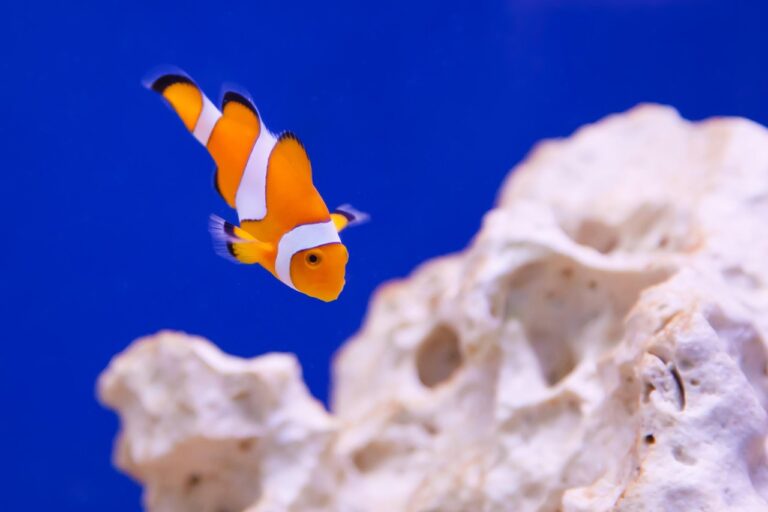
This works best for common species like Amphiprion ocellaris (Ocellaris clownfish) and Amphiprion percula (Percula clownfish). Wild-caught fish may show more dramatic size differences than captive-bred ones, but the pattern holds.
Keep in mind: size comparison is only useful when you have at least two fish in the same tank. A lone clownfish could be either sex based on size alone. You need something to compare against.
Also worth notingâjuveniles up to about six months old look nearly identical. You can’t reliably sex them by size until one starts to dominate and grow faster.

Behavioral Differences: Who’s the Boss and Who Cleans the Nest
If you spend even a few minutes watching a bonded pair of clownfish, you’ll notice a clear pecking order. The female runs the show. She eats first, claims the best spot in the anemone or host coral, and chases away anything that gets too closeâincluding you during tank maintenance.
Behavioral cues are one of the most reliable ways to tell males from females in a mated pair:
The female:
- Dominant and assertive. She controls the territory.
- Aggressive toward other fish, sometimes even toward the male.
- Leads the pair during swimming or feeding.
- Will nip or ram the male if he’s not “behaving.”
The male:
- Submissive. He defers to the female constantly.
- More active in nest preparationâcleaning a flat surface, removing debris, fanning the area.
- Does a “dance” or quivering display near the female during courtship.
- Tends the eggs. The male does most of the egg-guarding and fanning after the female lays.
One practical observation: if you see a fish constantly cleaning a tile, rock, or pot, that’s almost certainly the male getting ready for spawning. The female may watch or occasionally participate, but the male does the labor.
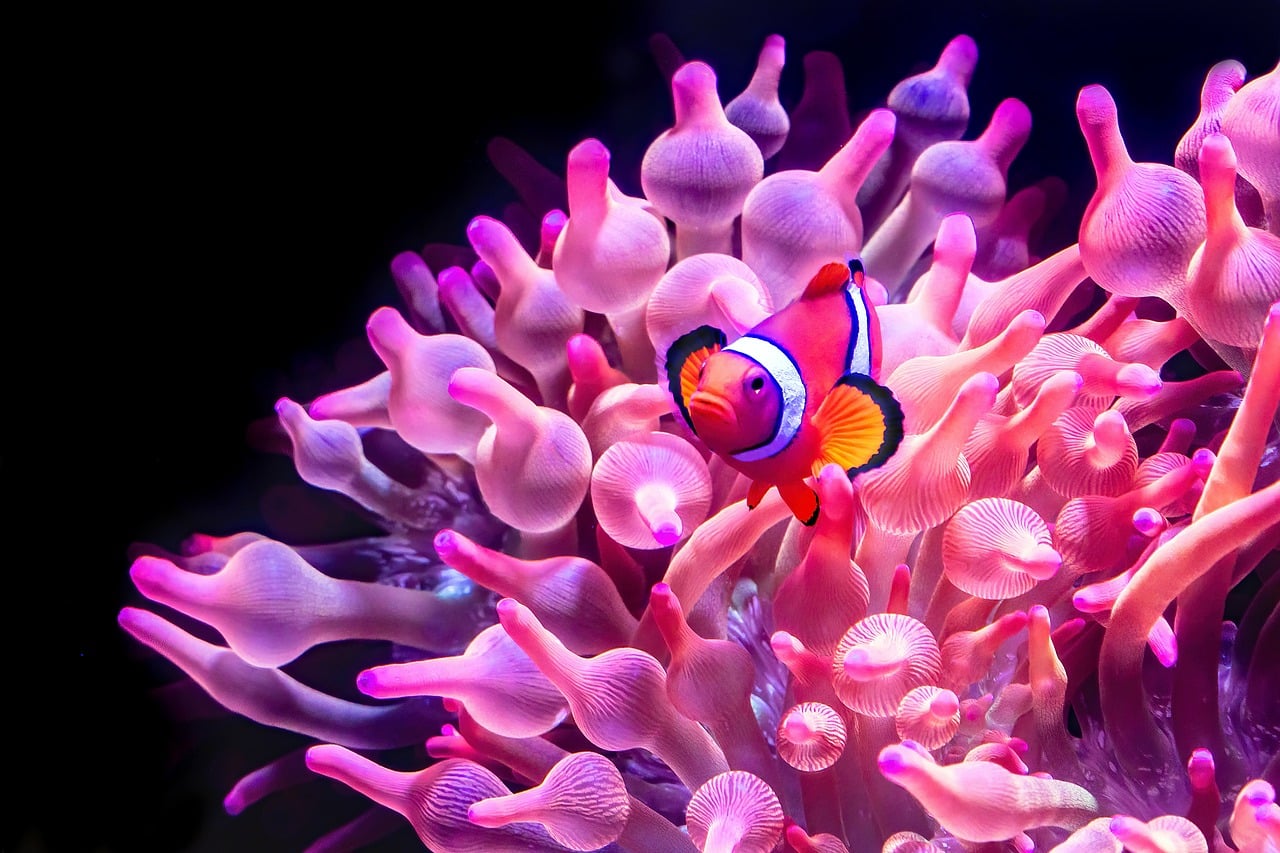
If both fish are aggressive and neither defers, you likely have two femalesâor two males competing for dominance. That needs attention quickly.
Color Intensity and Fin Shape: Subtle Markers
Some experienced keepers claim they can spot females by darker or more intense coloration. In certain species, females do appear slightly deeper in orange or black, while males may seem paler or more washed out.
Is this a reliable sexing method? Not really. Here’s why:
- Color varies significantly based on stress, diet, lighting, and water quality. A stressed female can look as pale as a healthy male.
- Some captive-bred strains (like designer clownfish) have been selectively bred for color, making natural sex-linked differences nearly invisible.
- Fin shape differences are small and inconsistent. Some females have slightly more rounded dorsal or anal fins, but this is subtle enough to be useless for most hobbyists.
Think of these as supporting clues, not primary evidence. If you have size and behavior pointing to one fish being female, slightly darker coloration confirms it. But don’t rely on color aloneâyou’ll be wrong more often than you’re right.
Visual Guide: Male vs Female Clownfish Comparison
| Trait | Female | Male |
|---|---|---|
| Size | Larger by 20â30% | Smaller, more slender |
| Body shape | Rounder belly, especially when gravid | Sleek, narrower profile |
| Behavior | Dominant, aggressive, leads the pair | Submissive, cleans nest, guards eggs |
| Color | May be slightly darker (not reliable) | May appear paler (not reliable) |
| Egg laying | Lays eggs (only absolute proof) | Fertilizes, fans, and guards eggs |
Use this as a quick reference when watching your tank. If a fish ticks at least three of the “female” boxes, you’re probably looking at a female. But until eggs appear, no single clue is 100% certain.
The Only 100% Reliable Method: Observing Egg Laying
If you want to know for sure which clownfish is female, wait for eggs. There’s no trick or shortcutâjust observation.
Here’s how it works:
- The female lays a cluster of small orange eggs on a flat surfaceâusually a terracotta pot, a tile, or the side of a rock near the host anemone.
- The male immediately follows, fertilizing the eggs as they’re laid.
- After laying, the female typically swims away while the male takes over careâfanning the eggs with his fins, removing dead ones, and chasing away threats.
If you witness egg laying, that’s the only time you can be 100% sure which fish is female. She’s the one producing the eggs. The male is the one obsessively tending them afterward.
This method requires your fish to be in breeding condition, which depends on diet, water quality, and social stability. Not every pair will spawn on command. But with patience and the right conditions, most healthy pairs will eventually lay eggs.
To encourage spawning, place a flat ceramic tile or terracotta saucer in the tank near where the pair sleeps. Many hobbyists use these clownfish breeding tiles specifically for this purpose.
Common Mistakes When Trying to Sex Clownfish
Mistakes happen, but some are costly. Here’s what experienced keepers see beginners get wrong repeatedly:
Mistake 1: Relying on color.
As discussed, color is unreliable. A fish that looks darker today might be stressed tomorrow. Don’t make pairing decisions based on color.
Mistake 2: Thinking the larger fish is automatically female.
In a new tank with two similar-sized fish, the larger one might just be a better eater. Give it weeksânot hoursâfor the dominant male to transition to female.
Mistake 3: Assuming two fish bought together are a pair.
LFS (local fish store) pairs are often two juveniles that haven’t yet differentiated. They look like a pair because they’re small and peaceful, but that can change fast as they mature.
Mistake 4: Judging juveniles too early.
You can’t reliably sex a clownfish until one is clearly dominant. Before that, all you have is guesses.
Mistake 5: Ignoring aggression.
If you see persistent chasing, missing scales, or torn fins, don’t assume it’s normal pair formation. It could be two females fighting for dominance. Separate them before one dies.
Patience is your best tool here. Rush it, and you’ll get it wrong.

Pairing Up: How to Know If You Have a True Mated Pair
True mated pairs behave differently than fish that just tolerate each other. Look for these signs:

- Shared host. The pair sleeps in the same anemone, coral, or corner of the tank every night.
- Synchronized swimming. They move together, especially when approaching food or investigating disturbances.
- Mutual defense. Both fish chase intruders together, not just the dominant one.
- Courtship. The male does a quivering dance near the female, often while cleaning a spawning site.
- Egg laying. The ultimate confirmation. If you see eggs, you have a mated pair.
If you have two fish and aren’t sure, isolate them in a tank with plenty of hiding spots (a clownfish host anemone replica can help). Watch for hierarchy. A clear dominant/submissive relationship usually forms within a few weeks if one is destined to become female.
If no hierarchy forms and both fish stay similarly sized and aggressive, you may need to separate them before damage occurs.
What If You Have Two Females? Spotting and Solving Aggression
This is the worst-case scenario. Two females in the same tank almost always leads to a death match.
Signs you might have two females:
- Both fish are large and similarly sized.
- Both show dominant behaviorâchasing, nipping, guarding territory.
- Neither defers to the other. No submissive displays.
- You see physical damage: torn fins, missing scales, or wounds near the tail.
What to do:
- Separate immediately. Put one fish in a quarantine tank or a breeder box until you can rehome it.
- Reassess after separation. Sometimes removing the more aggressive fish calms the remaining one, which may revert to male if no female is present.
- Consider rehoming. A single large clownfish might pair better with a smaller juvenile than with another large fish.
- Prevent it next time. Start with one male and one smaller juvenile. The juvenile will stay male if the larger one becomes female.
This is why early identification matters. Catch it early, and you can avoid the aggression altogether.
Equipment and Tools That Make Sexing Easier
You don’t need much to successfully sex clownfish, but a few products can speed up the process and reduce guesswork.
Observation tank or breeder box. If you suspect you have a developing pair, move them to a smaller tank or a clear breeder box inside the main tank. Watching daily behavior without other fish distractions makes dominance patterns obvious. A clownfish breeder box works well for this.
Reliable water test kit. Healthy pairs spawn more reliably. Stable water parameters (temperature 78â80°F, pH 8.0â8.4, ammonia/nitrite at 0) encourage breeding behavior. A saltwater test kit is essential for maintaining those conditions.
Breeding tiles. As mentioned, a flat ceramic tile gives your fish a place to lay eggs. Once eggs appear, sex identification becomes 100% certain. These clownfish spawning tiles are specifically designed for egg laying.
High-quality food. A varied diet rich in protein (like mysis shrimp, brine shrimp, and spirulina) boosts breeding condition. Fish in good health show their natural colors and behaviors more clearly.
None of these are strictly necessary, but they reduce the time between “I think I have a pair” and “I definitely have a pair.”
Real-World Example: Sexing a Newly Purchased Pair
Let’s walk through a typical scenario so you can apply this to your own tank.
The situation: You buy two Ocellaris clownfish from a local fish store. They’re about the same size at purchaseâroughly 1.5 inches each. Both appear healthy and eat well. You place them in a 20-gallon tank with a small anemone.
Week 1â2: Both fish explore the tank equally. No clear dominance. Both sleep in the anemone. You can’t tell which is which.
Week 3: One fish starts chasing the other during feeding time. The target fish begins to deferâswimming away when approached. You now have a dominant and a submissive.
Week 4â6: The dominant fish is noticeably larger. Its belly looks rounder. The submissive fish stays near the edge of the anemone and cleans the flat areas nearby. You notice a quivering movement when the smaller one swims toward the larger one.
Week 8: The larger fish is now clearly female based on size, round body, and dominant behavior. The smaller fish is maleâhe’s cleaning a tile, doing courtship displays, and deferring constantly.
Week 10: Eggs appear on the tile. The male fans them obsessively. You now have 100% confirmation.
This timeline is realistic for healthy, well-fed fish in stable water. If conditions are poor, the process might take monthsâor might not happen at all.
The key takeaway: be patient. Sex identification reveals itself over time, not instantly.
Final Thoughts and Next Steps
Knowing how to tell male from female clownfish is a skill that develops with observation. Start with the four main cluesâthe developmental rule, size and shape, behavior, and eventual egg layingâand use them together. No single clue is bulletproof on its own, but combined, they paint a clear picture.
Your next step is simple: watch your fish. Pick a pair you’ve been wondering about and note their size difference, daily behavior, and any spawning activity. If you’re planning to breed, set up a breeding tile and see if your pair responds.
If you need equipment to make the process easier, check out the product links in this articleâthey’re tools that experienced keepers use to successfully pair and breed clownfish. Otherwise, just enjoy the process. There’s nothing quite like watching a mated pair work together, and now you know exactly what to look for.