Fiji Clownfish Diving Guide: Exploring the Soft Coral Capital
Introduction
If you’re comparing destinations for a serious clownfish diving trip, Fiji should be on your shortlist. This is a practical guide for divers weighing Fiji against other Pacific options. Let’s get one thing straight: this is your Fiji clownfish diving guide to the best reefs, seasons, gear, and common mistakes. Fiji’s reputation as the soft coral capital isn’t hypeâit matters for clownfish sightings because these fish live with anemones, and anemones thrive in the nutrient-rich, current-fed waters that grow those vibrant soft coral gardens. This article cuts through the marketing and gives you specific, experience-based info to plan a real trip. Expect a breakdown of specific reefs, seasons, gear needs, and mistakes to avoid.

Why Fiji? The Soft Coral Capital and Clownfish Habitat
Fiji’s “soft coral capital” label isn’t just a tagline. It’s the result of environmental factors that directly help clownfish habitat. The islands sit where nutrient-rich upwellings and consistent currents meet. These conditions favor soft corals, whichâunlike hard coralsâdo well in higher nutrient loads and moderate to strong currents. Anemones, being cnidarians too, like similar spots. They attach to hard substrate in areas with good water flow that brings plankton for them and their clownfish. So, where you find dense soft coral gardens in Fiji, you’ll likely find healthy anemone colonies with resident clownfish.
Compared to other Pacific destinations like Indonesia or the Philippines, Fiji has a distinct edge. Indonesia has more clownfish species overall, but the reefs can be more spread out. The Philippines is good but often has more divers. Fiji’s advantage is the sheer density of soft coral cover on many of its best reefs. This concentration means anemones and clownfish cluster in specific, predictable spots. For a diver wanting to see multiple anemone colonies in one dive, Fiji’s soft coral bias is a real practical benefit. It simplifies the searchâyou’re not scouring a massive reef, but focusing on walls and bommies where soft coral carpets the substrate.
Best Fiji Islands for Clownfish Diving: A Comparison
Choosing between Fiji’s dive regions involves real tradeoffs. Your skill level, time, and budget will drive the decision. Here’s a direct comparison of the top four areas for clownfish diving.
- Taveuni (Rainbow Reef & Somosomo Strait): This is the gold standard for soft corals. The current is often strong, making it better for intermediate to advanced divers. You’ll see Amphiprion percula (true percula clownfish) and Amphiprion melanopus (fire clownfish) in good numbers. The anemones are often large, carpet-like, and attached to walls. Access is via liveaboard or staying on Taveuni. Dive costs run higher, around $150-200 USD per two-tank dive.
- Beqa Lagoon: Known for shark diving, but Beqa also has excellent, calmer soft coral and anemone sites. Currents are mild. This is the best choice for beginners or anyone wanting relaxed, long bottom times. You’ll see Amphiprion akindynos (barrier reef clownfish) frequently. Expect more silt than Taveuni, but visibility is still good. Dive costs are similar to Taveuni, but access is easier from Pacific Harbour.
- Mamanuca and Yasawa Islands: These are more accessible from Nadi, with many resorts offering day trips. Soft coral growth is patchier than Taveuni but still good at sites like the Purple Reef in the Mamanucas. Currents are moderate. Clownfish sightings are reliable but not as dense. This is a solid option for divers who are part of a mixed group with non-divers, as the island resorts have good non-dive amenities. Day boat dives are cheaper, often under $100 USD for two tanks.
The practical tradeoff is clear: if you want the best soft coral and clownfish density and can handle current, go to Taveuni. If you’re a newer diver or want a more relaxed trip with other activities, Beqa or the Mamanucas work better. Peak season for all is May to October when visibility is highest.
Clownfish Species You Will Encounter in Fiji
You’ll likely encounter three main species in Fiji. Knowing them helps identify what you’re photographing and understand their behavior.
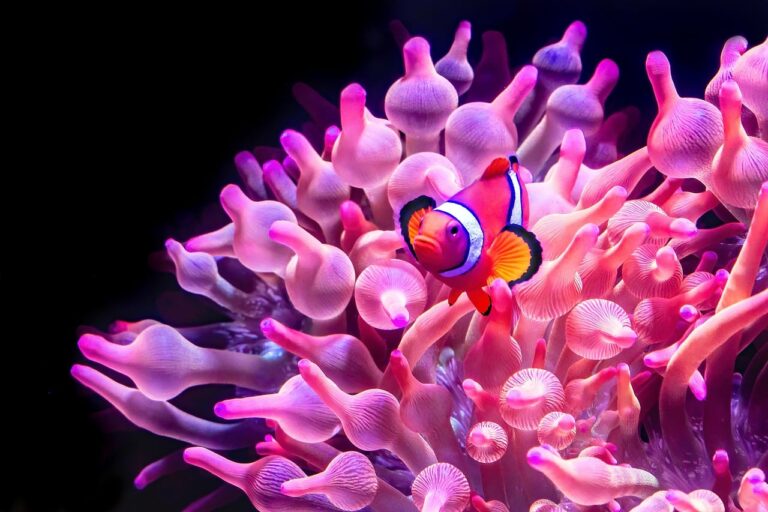
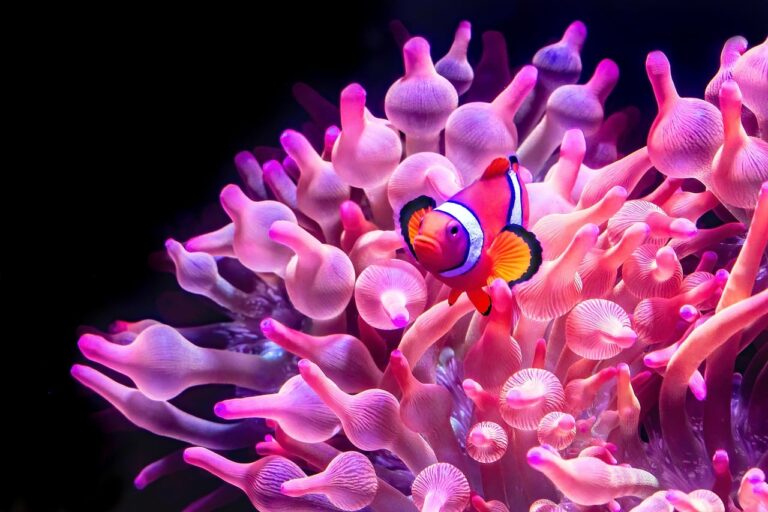
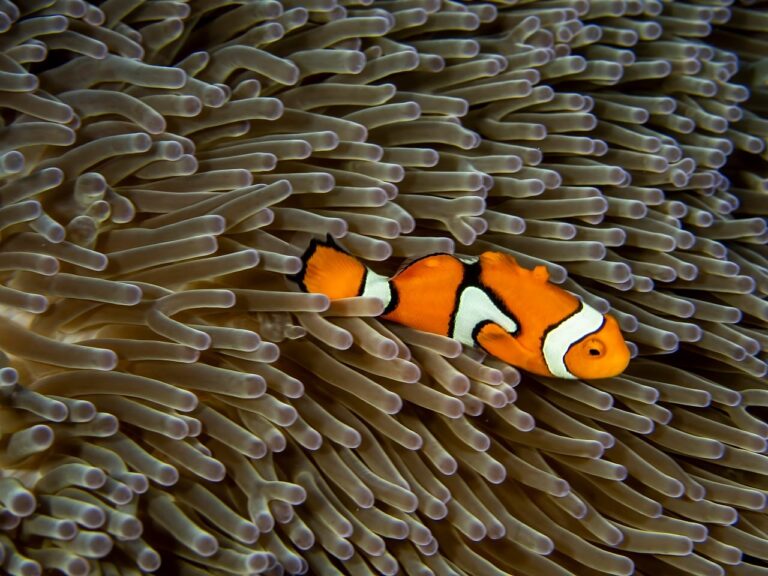
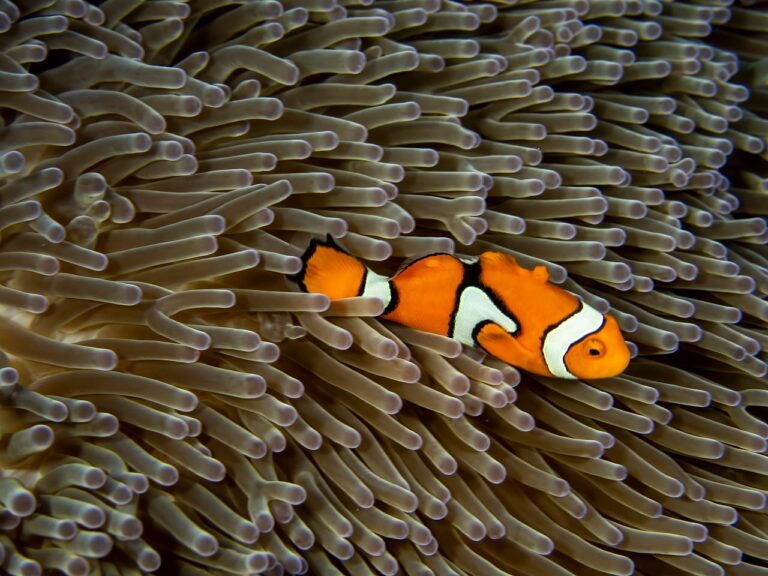
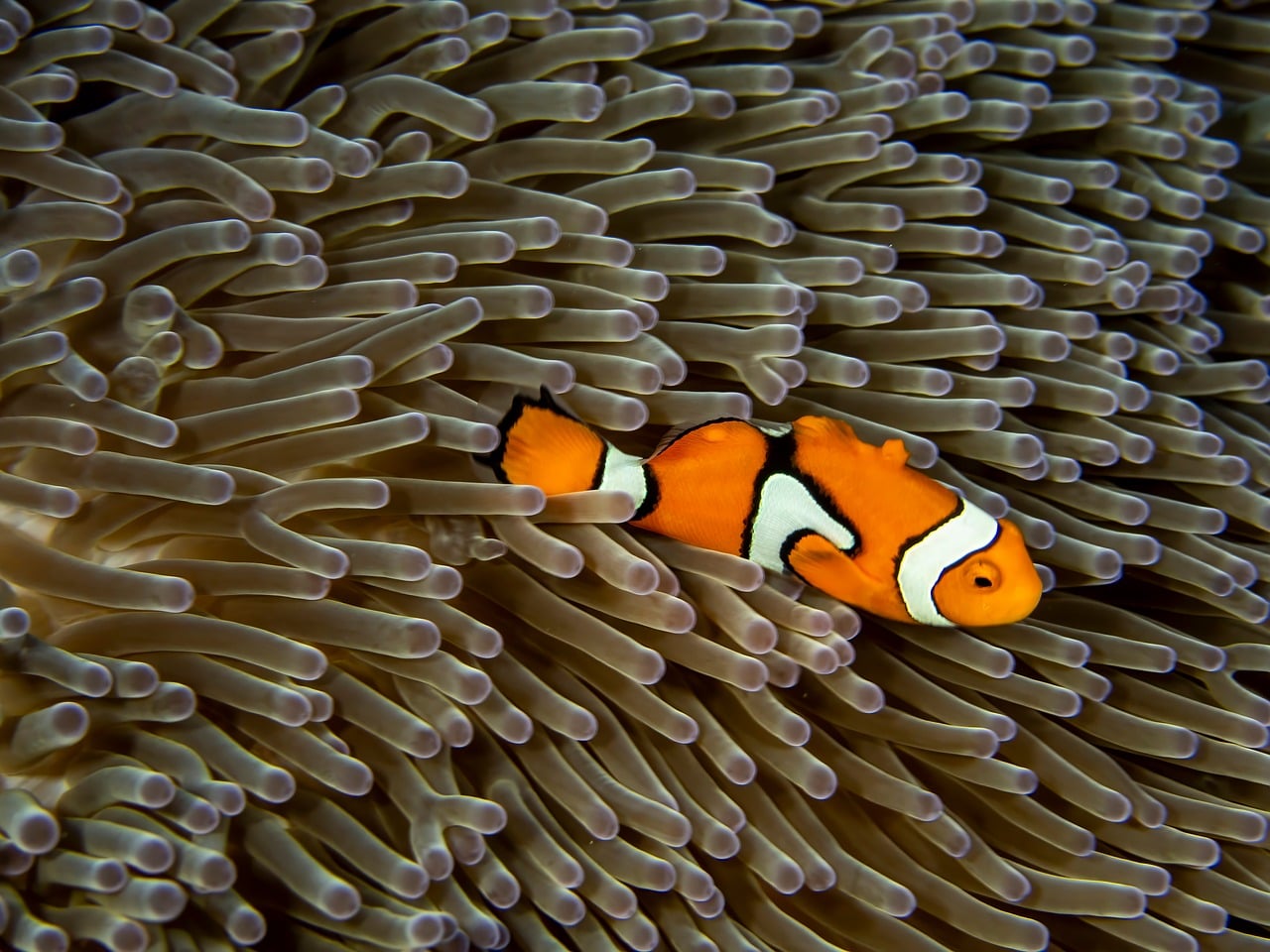
- Amphiprion percula (True Percula Clownfish): The iconic orange fish with white bands outlined in black. In Fiji, they’re most common in the Somosomo Strait. They host almost exclusively in Heteractis magnifica (magnificent sea anemone) and Stichodactyla gigantea (giant carpet anemone). Look for them at depths of 5-20 meters. Their black outlines are thicker and more defined than the similar-looking false percula.
- Amphiprion melanopus (Fire Clownfish): Dark brown to black body with a bright orange-red belly and face. You’ll see them in the Somosomo Strait and Beqa. They’re smaller and more aggressive than perculas. Their preferred host is Entacmaea quadricolor (bulb-tentacle anemone). They often live in groups with a single large female. Depth range is 3-15 meters.
- Amphiprion akindynos (Barrier Reef Clownfish): The most common clownfish in Fiji’s lagoons and outer reefs. They’re a lighter orange with two white bars and minimal black edging. They’re less fussy about their host anemone and can be found in Heteractis crispa (sebae anemone) and Macrodactyla doreensis (corkscrew anemone). Depth range is 2-25 meters. Beginners will see these most often in Beqa and the Mamanucas.
Identification tip: look at the black border. Thick black borders mean true percula. Thin or absent borders mean it’s likely a barrier reef or false percula. This matters if you’re keeping a dive log or submitting photos to identification sites.
Soft Coral Hotspots: Where Clownfish and Anemones Thrive
Three specific dive sites are worth planning your itinerary around because they combine massive soft coral gardens with reliable anemone colonies.
- White Wall (Taveuni): An iconic site. Soft coral coverage is nearly 100% on the vertical wall. Anemones here are often attached to the wall face itself. The current is strong. A dive torch is essential, even for a day dive, because the wall’s color and the anemones’ tentacles look dramatically different with artificial light. This site is for experienced divers.
- Purple Reef (Mamanucas): This is actually a series of rocky pinnacles covered in vibrant purple and pink soft corals. The top of the pinnacles, in shallower water (5-10 meters), hold the most anemones. This is a manageable site for most certified divers. Current can be mild to moderate. A macro lens or a camera with good close-focus capability is useful here because some anemone clusters are small but dense.
- Beqa Lagoon (various sites, e.g., Caesars Rock): While Beqa is famous for its shark feed, its soft coral sites are excellent for beginners. The lagoon is protected, so currents are minimal. Anemones here tend to be in deeper water, 12-20 meters, attached to bommies. Soft coral growth is less tall than Taveuni but covers the reef substrate well. A dive torch is still helpful, even at depth.
The density of soft coral directly increases anemone presence for a simple reason: both compete for the same type of substrateâhard, vertical surfaces with good current. When you find a site dominated by soft coral, you can predict the best areas to find anemones. It cuts down search time significantly.

Best Time to Dive for Clownfish in Fiji
The primary factor is visibility, not water temperature. Fiji has two seasons.
- Dry Season (May to October): This is the optimal time. Water temperature ranges from 24-27°C. Visibility is consistently 20-40 meters. The tradeoff is higher prices and more dive boats. For clownfish sightings, this is the best time because you can see the reefs clearly and spot anemones from a distance. Booking at least 3-4 months in advance is recommended.
- Wet Season (November to April): Water temperature is warmer (27-30°C). Visibility drops to 10-15 meters due to plankton blooms. The tradeoff is cheaper dive packages and fewer crowds. However, clownfish breeding season peaks in the warmer months. You may see more egg-laying activity. The practical advice is to only book the wet season if you’re a single diver on a budget and can tolerate lower visibility. If you want the best photographic conditions, stick to the dry season.
For flight bookings, the dry season aligns with low-season rates for North American and European travelers (June to September). Look for windows in May or October for the best balance of good weather and lower prices.
Essential Gear for Fiji Clownfish Diving
Your gear decisions should be based on Fiji’s specific conditions. Don’t just pack your standard tropical kit.
- 3mm Full Wetsuit: The water is warm, but a rash guard or shorty is often insufficient for three-dive days. A 3mm full suit provides enough thermal protection for 25-27°C water and protects against stray current brushes with coral. Divers who need a new wetsuit may want to look for options online. Look for one with a back zip for easy donning.
- Reef-Safe Sunscreen: This is mandatory on most liveaboards and resorts. Fiji’s coral is sensitive. Mineral-based, non-nano zinc oxide sunscreens are standard. Don’t bring oxybenzone-based products. They’ll be confiscated or not appreciated.
- Underwater Camera with Close-Focus Capability: Soft corals appear monochromatic in natural light. Their true colors pop with a flash or torch. A basic action camera like a GoPro in a housing works, but for clownfish and anemones, a dedicated compact underwater camera with a macro mode (e.g., a mid-range Olympus Tough or similar) makes a big difference. You don’t need a DSLR. You need a camera that can focus close to the anemone without a wet lens. This is one area where spending a bit more is worth it.
- Dive Torch: Essential even for day dives. The anemone’s tentacles, especially of Entacmaea quadricolor, look brilliantly fluorescent green or red under a bright torch. A small 1000-lumen torch is sufficient. A strobe is even better for photography but is a bigger investment. A torch is the cheapest way to improve your experience. A reliable scuba dive torch is worth considering when packing.
Liveaboard vs. Land-Based Diving: Which Is Better for Clownfish?
This decision has a huge impact on your clownfish experience. There’s no universal answer; it depends on your priorities.
- Liveaboard: The main advantage is access. Liveaboards in the Somosomo Strait can reach the best soft coral sites at first light before day boats arrive. You get more dives per day (up to 4-5). The disadvantage is cost, typically $250-400 USD per day all-inclusive, and the lack of a fixed base for non-diving days. For a dedicated clownfish diver who wants maximum time on the best reefs and can handle stronger currents, a liveaboard is superior. Operators like Nai’a or the Siren Fleet are well-regarded. They often run 7-10 day itineraries.
- Land-Based Resort: This is better for beginners, divers with non-diving partners, or anyone who wants more flexibility. Resorts like Beqa Lagoon Resort or one of the Mamanuca island resorts offer 2-3 dives per day from a fixed base. The advantage is comfort, variety of activities, and lower per-day cost ($150-250 USD including accommodation and diving). The disadvantage is you’re limited to the operator’s typical sites, which may not be the absolute best soft coral spots. For calmer conditions and easier diving, land-based is the sensible choice.
My recommendation: if you have a week and can manage current, do a 4-day liveaboard in the Somosomo Strait followed by 3 days at a land-based resort in the Mamanucas or Beqa. This gives you the best of both.
Dive Safety and Etiquette Around Anemones
Anemones aren’t aggressive, but they’re not harmless either. Their nematocysts (stinging cells) are potent for small creatures. For humans, a brush can cause a mild rash or a more severe sting in allergic individuals. The practical rule is simple: don’t touch the anemone. It damages the anemone and risks a sting. Maintain a minimum distance of one meter from any anemone’s tentacles.
Buoyancy control is critical around soft corals. These corals are delicate. A fin kick can break off a whole colony that took years to grow. If you’re not confident in your buoyancy, stick to sandy areas for your safety stop and avoid hovering directly above soft coral beds.
Clownfish are territorial. When an anemone is present, one or two adult fish will guard it. They may nip at you if you get too close. That’s normal. Don’t chase them for a photo. Use a slow approach and a macro lens. Chasing stresses the fish and can cause them to abandon the anemone temporarily. Also, avoid using gloves unless explicitly required for a specific dive task (e.g., handling mooring lines). Gloves encourage touching and increase the risk of damaging coral. Respect the marine life and you’ll have a better, safer dive.
Common Mistakes Divers Make When Clownfish Diving in Fiji
These four mistakes are avoidable and will improve your trip significantly.
- Booking during the wet season for visibility: The plankton bloom reduces visibility dramatically. You might swim right past an anemone and miss it. How to avoid: Book between May and October. If you must go in the wet season, dive sites with strong current (e.g., Somosomo Strait) as the current clears the water faster.
- Not bringing a strobe or torch: Soft corals and anemones look completely flat and greyish-blue without artificial light. You won’t see the incredible colors that make Fiji famous. How to avoid: Buy or rent a dive torch and, for photography, a strobe. A $50 torch changes your experience.
- Ignoring current strengths in Somosomo Strait: This is not a gentle drift. It can be strong enough to require an experienced diver to move against it. Beginners should not dive Rainbow Reef without an advanced guide or during a slack tide. How to avoid: If you’re a beginner, book Beqa or Mamanucas instead.
- Assuming all anemones have clownfish: Many anemones in Fiji are unoccupied, especially in areas with heavy current or where fish have been removed. How to avoid: Look for movement and the characteristically busy swimming pattern of a clownfish near the anemone. Check the tentacle tips for activity before committing to a long photo setup.
Fiji Clownfish Diving: Budget Tips and How to Save
Fiji isn’t cheap, but there are ways to reduce costs without sacrificing the experience.
- Use Nadi as a base for day trips to the Mamanucas: You don’t need to stay on an expensive resort island. A hotel in Nadi is cheaper, and day boat trips to the Mamanucas cost around $120-150 USD including two dives, lunch, and gear rental. This is the most budget-friendly option for a week-long trip.
- Stay on islands with cheaper liveaboard access: Some liveaboards, especially those running shorter itineraries, offer one-way pickups from resorts on Taveuni or Vanua Levu. You can stay at a basic guesthouse (around $50-80 USD per night) and join a liveaboard for only part of its itinerary. This reduces the liveaboard cost from $250/day to something closer to $150-200/day.
- Book during shoulder seasons: The months of May and October are in the dry season but aren’t peak travel months. Prices for flights and accommodation are lower. Dive packages may also have discounts if booked as part of a resort package.
- Rent gear locally vs. bringing your own: Bringing your own wetsuit and mask saves money on rental fees. A typical gear rental package for a week can cost $100-150. If you own decent gear, bring it. If you only dive once a year, rent in Fiji. The gear quality is generally good on liveaboards and higher-end resorts.
Typical dive package costs: a 10-dive package at a good resort is about $400-500 USD. Liveaboards average $300-350 per day all-inclusive. Budget at least $150 per day for a comfortable, non-budget trip.
What to Expect: A Typical Clownfish Dive Day
Here’s a realistic day on a liveaboard or a well-run resort in the dry season.
- 7:30 AM: Dive briefing. The dive guide explains the site, current, depth, and likely anemone locations. You gear up on the boat.
- 8:00 AM: First dive. Depth is 15-25 meters on a wall or bommie. You spend 40-50 minutes looking for anemones and soft corals. You and your buddy use a slow, methodical search pattern. You’ll likely find 2-3 anemone colonies with clownfish on a good site.
- 10:00 AM: Surface interval. Snacks, fruit, water, and logbooks come out. This is a good time to review photos, ask the guide questions, or swap SD cards.
- 11:30 AM: Second dive at a different site. Often shallower (5-15 meters) to avoid repetitive depth stress. This is a great time for macro photography of clownfish portraits or sea fans. Soft coral colors will be vibrant with the sun high.
- 1:30 PM: Lunch back on the boat or resort. You’re done by 2 PM. The rest of the day is for rest, reading, or a night dive.
Bottom times are typically 40 minutes to an hour. Depths rarely exceed 25 meters. Most liveaboards offer a third dive in the afternoon. The key is that the morning dives, before the currents pick up, are the best for anemone sighting.

Final Recommendations for Your Fiji Clownfish Dive Trip
To wrap this up, here’s the actionable summary.
- For beginners: Book a land-based resort in Beqa Lagoon. The calm conditions and reliable clownfish sightings (especially barrier reef clownfish) make it the safest and most rewarding choice.
- For experienced divers: Book a liveaboard in the Somosomo Strait. Prioritize Taveuni for the Rainbow Reef and White Wall. You’ll see dense soft coral and percula clownfish. A 7-10 day itinerary combining a liveaboard with a few days at a resort in the Mamanucas is ideal.
- Optimal season: May to October. Book flights and accommodation at least 3 months in advance for the best prices.
- Essential gear to buy or rent: A 3mm wetsuit, a dive torch, and an underwater camera with macro capability. Rent the rest locally if it saves luggage weight.
Consider an 8-day itinerary: 4 nights on a liveaboard in Somosomo Strait, then 4 nights at a resort in Beqa or Mamanucas. This gives you the best soft coral and the easiest diving in one trip. Most operators are reliable, but always check recent dive logs for site-specific advice on current. Now start comparing flight routes and dive packages. Your anemone and clownfish sightings are worth the planning effort. Have you decided which region fits your skill level? That’s the first and most important choice you’ll make.